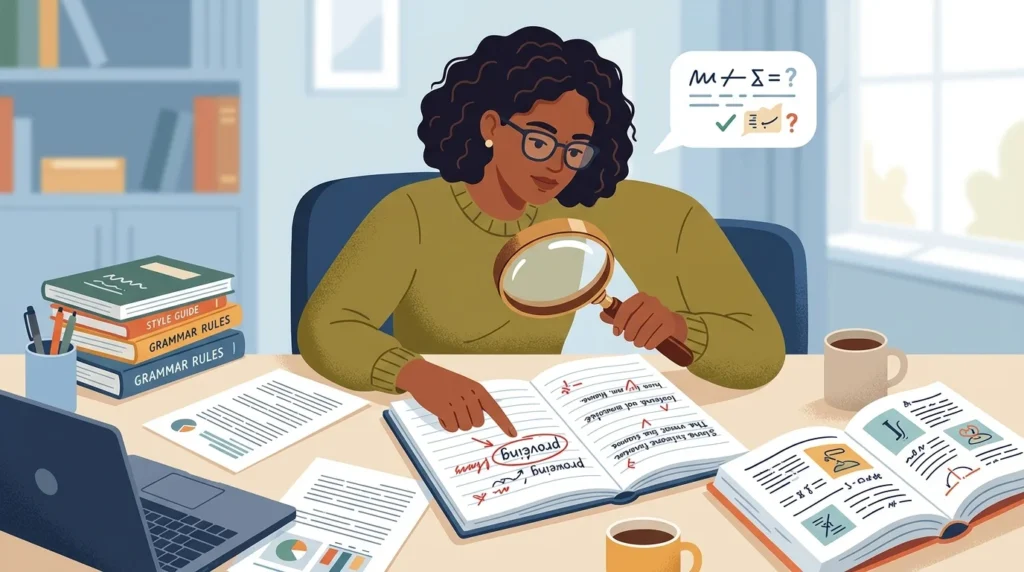

Proving is the correct standard spelling. Prooving is a common misspelling. The word proving is the present participle or -ing form of prove, meaning to show that something is true, correct, effective, or genuine by providing evidence or demonstrating it.
Quick Answer
The correct spelling is proving, not prooving. When the verb prove takes the -ing ending, the final silent e is removed: prove → proving. You do not add another “o.” For example, “She is proving her point with strong evidence.” If you write “prooving,” you are using an incorrect spelling in standard modern English.
What Does Proving Mean?
Proving is the -ing form of the verb prove. It means showing or demonstrating that something is true, correct, valid, effective, or genuine.
The word can be used in everyday conversations, academic writing, mathematics, science, business, law, and many other contexts. It can refer to providing evidence, demonstrating a fact, or showing that someone or something meets a particular standard.
See Also:
Examples of Proving
- She is proving that the method works.
- He is proving his point with evidence.
- The experiment is proving the theory correct.
- They are proving their ability through hard work.
What Does Prooving Mean?
Prooving is generally an incorrect spelling of proving. It is usually created because people mistakenly think the word prove keeps its final “e” and simply receives “-ing,” or because they confuse the spelling pattern with words that contain a double vowel.
In standard modern English, when prove becomes its -ing form, the final e is removed. The correct form is therefore proving.
The Core Rule: Prove Becomes Proving
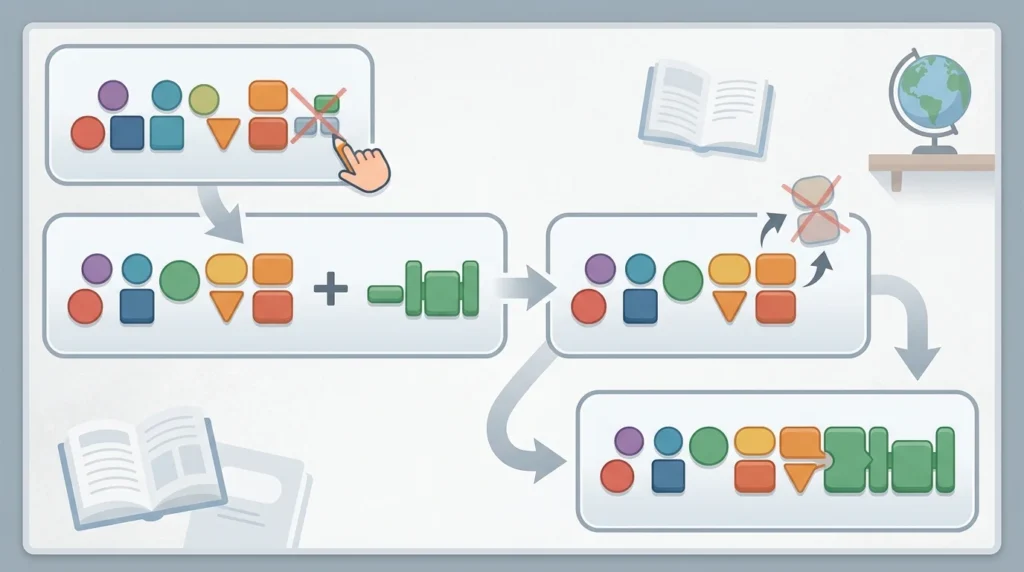
When a verb ends in a silent e, that final e is commonly dropped before adding -ing.
| Base Verb | Correct -ing Form |
|---|---|
| prove | proving |
| move | moving |
| write | writing |
| make | making |
| use | using |
So the spelling follows this pattern:
prove → remove the final e → prov + ing → proving
Why Is Proving Spelled Without the E?
The base verb is prove. When the -ing suffix is added, the final silent e is dropped. This gives us proving.
The important point is that you do not change prove into “proov” before adding -ing. The spelling is based on the established English suffix rule:
prove + ing → proving
That is why prooving is not the standard spelling.
How to Use Proving in a Sentence
Proving can describe an action that is happening now, an ongoing attempt to demonstrate something, or the process of establishing something as true or valid.
Proving Something Is True
Use proving when someone is providing evidence that something is true.
Example: The scientist is proving that the new process is reliable.
See Also:
Proving a Point
Use proving when someone demonstrates that their argument or statement is correct.
Example: She is proving her point with several examples.
Proving Ability
Proving can also describe demonstrating skill, ability, or value.
Example: The young player is proving that he can compete at a higher level.
Proving Something Works
The word is also common when testing a product, method, system, or idea.
Example: The new software is proving useful for the team.
Correct Examples of Proving
- She is proving her argument with reliable evidence.
- He is proving that the calculation is correct.
- The experiment is proving the original theory.
- They are proving their skills through practical work.
- The new system is proving to be effective.
- She is proving that practice can improve performance.
- The evidence is proving his claim to be accurate.
- He kept working, proving that he was serious about the project.
- The test is proving that the material is durable.
- Her results are proving the method successful.
- The company is proving its ability to adapt.
- The student is proving that the answer was correct.
Prooving vs Proving: Incorrect and Correct Examples
| Incorrect | Correct | Why |
|---|---|---|
| She is prooving her point. | She is proving her point. | The final e in prove is dropped before -ing. |
| He is prooving the theory. | He is proving the theory. | Prooving is not the standard spelling. |
| They are prooving their ability. | They are proving their ability. | The correct form is prove → proving. |
| The test is prooving useful. | The test is proving useful. | Remove the final e from prove. |
| She is prooving the claim. | She is proving the claim. | The word does not contain “oo” in this form. |
| He is prooving his innocence. | He is proving his innocence. | The correct -ing form is proving. |
| The results are prooving the method works. | The results are proving the method works. | Proving is the standard spelling. |
| We are prooving our case. | We are proving our case. | Prove loses its final e before -ing. |
| The experiment is prooving successful. | The experiment is proving successful. | Prooving is a spelling error. |
| She is prooving that she was right. | She is proving that she was right. | Proving is the correct present participle. |
Why Do People Write Prooving?
There are several reasons people accidentally write prooving.
Adding -ing Without Removing the E
One common mistake is treating the base word as if you can simply attach -ing to the entire spelling. This would produce “proveing,” but English removes the final silent e. Some people then incorrectly alter the spelling further and produce “prooving.”
Pronunciation Can Cause Confusion
The pronunciation of prove can make the spelling less obvious. The long vowel sound may lead some writers to think that the word should contain two “o” letters when written with -ing.
Confusion With Other Words
English contains many words with double vowels, so writers may apply the wrong spelling pattern to prove. However, proving has its own established spelling.
Typing and Autocomplete
Fast typing can also cause spelling errors. Spellcheckers may identify prooving as incorrect, but relying entirely on automatic correction can allow mistakes to remain unnoticed.
See Also:
Proving in Real English
Proving is completely natural and common in modern English. You will find it in everyday speech as well as professional, academic, scientific, mathematical, and legal contexts.
For example, people commonly say:
- “You’re proving your point.”
- “She is proving herself.”
- “The results are proving useful.”
- “He is proving that the system works.”
Prooving is not an alternative everyday spelling. If you mean the -ing form of prove, use proving.
Prove, Proved, Proven, and Proving
These forms are related, but they have different grammatical uses.
| Form | Use | Example |
|---|---|---|
| prove | Base verb | I need to prove my claim. |
| proves | Present tense, third person singular | The evidence proves the claim. |
| proved | Past tense / past participle | She proved her point. |
| proven | Past participle, especially common in American English and as an adjective | The method has proven effective. |
| proving | Present participle / gerund | He is proving his ability. |
Proving vs Prove
Prove is the base form, while proving is the -ing form.
- Prove: I want to prove my point.
- Proving: I am proving my point.
Use proving when the grammatical structure requires the -ing form, such as after forms of be in the progressive tense.
Common Mistakes to Avoid
- Do not write prooving when you mean proving.
- Do not add another “o” to the word.
- Remember that prove loses its final silent e before -ing.
- Do not confuse proving with proved or proven.
- Remember the spelling pattern: prove → proving.
An Easy Way to Remember Proving

A simple memory trick is to remember that prove drops its final e before -ing.
PROVE → PROV + ING → PROVING
Think of other familiar words with the same pattern:
- move → moving
- write → writing
- make → making
- use → using
- prove → proving
If you remember “drop the final e,” it becomes much easier to avoid the incorrect spelling prooving.
Frequently Asked Questions
Is prooving a correct spelling?
No. Prooving is generally an incorrect spelling. The correct form of prove with -ing is proving.
Is it proving or prooving?
The correct spelling is proving. The spelling prooving is a misspelling.
Why is proving spelled with one o?
Proving comes from prove. The final silent e is removed before adding -ing, producing proving.
What is the meaning of proving?
Proving means showing or demonstrating that something is true, correct, valid, effective, or genuine.
What is the base word of proving?
The base word is prove. Its -ing form is proving.
What is the past tense of prove?
The simple past tense of prove is proved. For example: “She proved her point.”
Is proven a word?
Yes. Proven is a standard past participle of prove and is also commonly used as an adjective, as in “a proven method.”
Can I use prooving in formal writing?
No. In standard formal and professional writing, use proving. The spelling prooving should be corrected.
What is the spelling rule for proving?
The spelling rule is to remove the final silent e from prove before adding -ing: prove → proving.
How do you spell proving correctly?
It is spelled P-R-O-V-I-N-G: proving.
Quick Summary
Proving is the correct spelling, while prooving is a common misspelling. Proving is the -ing form of the verb prove, which means to show that something is true, correct, effective, or genuine. The spelling follows the common rule of dropping the final silent e before adding -ing: prove → proving. You can use proving in everyday conversations, academic writing, professional communication, science, mathematics, and many other contexts. Remember the simple pattern: move → moving, write → writing, prove → proving. If you are unsure whether to write “prooving” or “proving,” always choose proving
See Also:
Protestors vs Protesters: Which Is Correct?