
Plaque is the standard spelling in modern English. It can refer to a flat commemorative or decorative plate, the bacterial substance that forms on teeth, or a medical deposit or raised area in the body. Placque is generally a misspelling of plaque, not a separate everyday English word with a different meaning. For modern school, professional, medical, dental, and online writing, use plaque.
What Is the Difference Between Placque and Plaque?
The main difference between placque and plaque is spelling and standard usage. Plaque is the established modern English form. Placque adds an unnecessary c before q and is normally treated as a spelling error when the intended word is plaque.
The standard word plaque is a noun with several meanings. It can describe a flat object bearing writing, such as a commemorative plaque on a building. In dentistry, it means the bacterial substance that forms on teeth. In specialized medical contexts, it can refer to a raised area or a buildup of material inside the body.
There is no ordinary meaning difference created by adding the extra c. If you are talking about a memorial, award, dental buildup, or medical plaque, the spelling you normally need is plaque.
Why It Matters
A one-letter spelling error can be easy to overlook, especially when the incorrect version looks believable. However, placque can stand out in professional writing because plaque is a familiar established word across several fields.
The distinction matters particularly in situations where accuracy is important. A dentist may write about dental plaque, a museum may describe a historical plaque, a company may present an achievement plaque, and a medical professional may discuss plaque in a clinical context. In all these common uses, the standard spelling is plaque.
Using the correct spelling also prevents confusion with other words that look or sound similar. The word plaque has an unusual written form, so learning its exact spelling is more useful than trying to spell it from pronunciation alone.
The Core Rule
Use “plaque” in modern standard English. Do not add an extra “c” to make “placque.”
- ✅ plaque — standard spelling
- ❌ placque — generally a misspelling
- ✅ dental plaque
- ✅ commemorative plaque
- ✅ arterial plaque
- ✅ historical plaque
The easiest visual memory rule is to remember the six-letter spelling:
P-L-A-Q-U-E
There is no c between the a and the q.
How to Use Plaque
Plaque for a Memorial or Marker
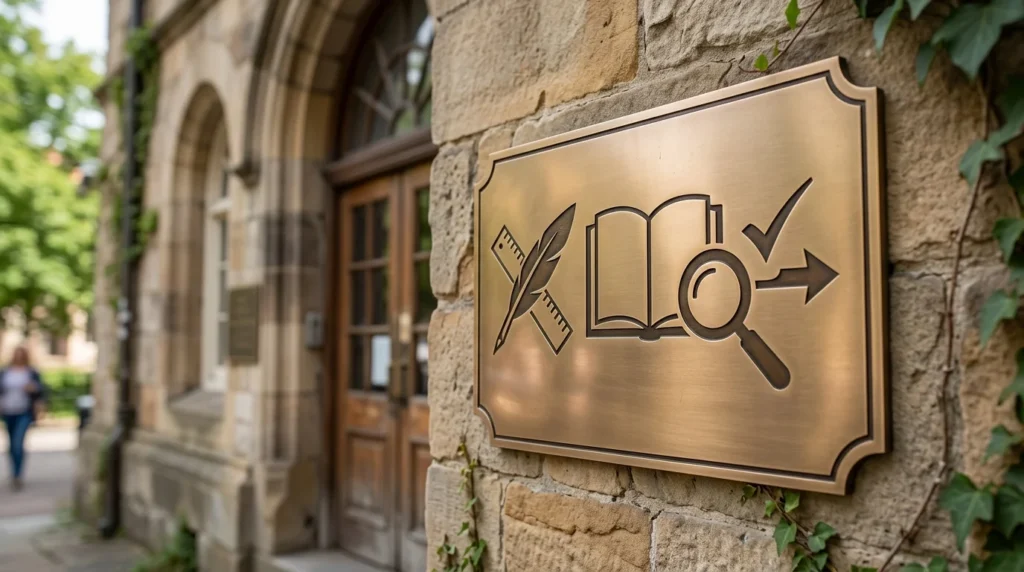
A plaque can be a flat piece of metal, stone, wood, or another material with writing on it. It may be attached to a wall, building, monument, or other object to record information or honor a person or event.
For example, a building may have a bronze plaque identifying an important person who lived there. A town may install a commemorative plaque to remember a historical event.
See Also: Cheer vs Chear Differences: Meaning and Correct Usage
Plaque in Dentistry
In dental contexts, plaque refers to a substance containing bacteria that forms on the surface of teeth. Cambridge lists this as a separate noun sense from the flat-object meaning.
Common expressions include dental plaque, plaque buildup, and remove plaque.
Plaque in Medicine
In specialized medical usage, plaque can refer to a small raised area on an internal surface of the body or the material that forms it. Medical contexts can include different kinds of plaques, depending on the condition being discussed.
For example, medical writing may discuss fatty plaque associated with blood vessels or plaques associated with certain neurological conditions.
Plaque as a Countable Noun
When plaque means a physical object such as an award or memorial marker, it is normally countable: a plaque, two plaques, or several plaques.
In substance-related meanings, such as dental plaque, the word is often used as an uncountable noun. The exact grammar depends on the meaning and context.
Correct Examples
In Conversation
“Did you see the plaque outside the old library?”
At the Dentist
“The dentist explained how regular brushing helps control plaque.”
At School
“Our school placed a plaque near the entrance to honor its founder.”
In the Workplace
“The company presented Maria with a plaque for completing twenty years of service.”
In an Email
“Please confirm the wording that should appear on the commemorative plaque.”
In a Museum
“The plaque beside the painting provides information about the artist.”
In Academic Writing
“The study examined factors associated with plaque formation.”
In a Medical Context
“The physician discussed the significance of plaque detected during the examination.”
On a Website
“The historical plaque marks the location of the original building.”
In Social Media
“Our team received a beautiful plaque after winning the regional competition.”
See Also: Trauma vs Trama Differences: Which Spelling Is Correct?
Incorrect vs. Correct
| ❌ Incorrect | ✅ Correct | Why |
|---|---|---|
| The building has a commemorative placque. | The building has a commemorative plaque. | Plaque is the standard spelling. |
| The dentist found placque on my teeth. | The dentist found plaque on my teeth. | The dental substance is spelled plaque. |
| They unveiled a new placque. | They unveiled a new plaque. | The memorial or commemorative object is a plaque. |
| She received an achievement placque. | She received an achievement plaque. | The standard noun is plaque. |
| The museum installed a brass placque. | The museum installed a brass plaque. | Placque adds an unnecessary c. |
| Daily brushing helps remove placque. | Daily brushing helps remove plaque. | The dental meaning uses plaque. |
| The historical placque explains the site’s history. | The historical plaque explains the site’s history. | A historical marker is a plaque. |
| The doctor discussed arterial placque. | The doctor discussed arterial plaque. | The medical term is spelled plaque. |
| The school ordered ten placques. | The school ordered ten plaques. | The standard plural is plaques. |
| The award included a silver placque. | The award included a silver plaque. | The award object is spelled plaque. |
Why People Make This Mistake
Phonetic Similarity
The pronunciation of plaque does not clearly reveal its spelling. Cambridge gives the US pronunciation as /plæk/, while UK pronunciation can be /plɑːk/ or /plæk/. The spoken word therefore gives the writer little information about whether a c belongs in the written form.
When people hear a word before seeing it written, they may try to construct the spelling from the sound. That is especially risky with words containing unusual letter combinations.
The Unusual “-que” Pattern
The ending of plaque looks unusual to many English learners. The combination que can make the spelling feel more complicated than it actually is.
Because English contains many words with unusual spelling patterns, writers may incorrectly assume that an additional c should appear before the q. It does not.
Visual Spelling Overgeneralization
Sometimes writers remember the general shape of a word without remembering its exact letter sequence. Placque looks close enough to plaque that the extra letter can seem harmless.
This is a common spelling problem: an incorrect form can look familiar even when it does not follow the established spelling of the word.
Spellcheck and Autocomplete
Digital tools can help with spelling, but they should not replace knowledge of the word. Search engines, user-generated content, scanned documents, and unusual databases can contain misspellings. Seeing placque somewhere online does not establish it as the standard spelling.
Translation Interference
English learners may also transfer spelling patterns from another language. A word that has a different spelling or pronunciation pattern in another language may encourage a writer to add or remove letters when writing English.
The safest approach is to learn the standard English form directly: plaque.
Common Mistakes Checklist
Adding an Extra C
Mistake: Writing placque.
Why it happens: The extra c makes the word look familiar to some writers.
How to avoid it: Memorize the sequence pla + que.
Writing “Placques” as the Plural
Mistake: Adding the plural ending to the misspelled form.
Correct: plaques.
The standard plural is formed by adding -s to plaque.
Spelling From Pronunciation
Mistake: Trying to write the word exactly as it sounds.
Why it happens: The pronunciation does not reveal the unusual spelling.
How to avoid it: Remember the written sequence P-L-A-Q-U-E.
Assuming Placque Has a Different Meaning
Mistake: Treating placque as a second English word with a separate meaning.
How to avoid it: In ordinary modern English, use plaque for the relevant meanings.
Using the Wrong Plural
Mistake: Writing plaques incorrectly as something such as plaqueses.
Correct: plaques.
Placque vs. Plaque in Real English
Plaque Is the Natural Modern Form
Plaque is the normal and natural spelling in contemporary English. It appears across everyday, professional, academic, dental, medical, historical, and institutional contexts. A reader encountering plaque will recognize the intended word based on context. The spelling does not change when the meaning changes from a commemorative plate to dental buildup or a specialized medical deposit.
Placque Is Not a Normal Modern Alternative
Placque is not normally used as an alternative spelling of plaque in contemporary standard English. If it appears in an ordinary sentence, readers will generally interpret it as an attempt to spell plaque. It should therefore not be selected simply because it looks plausible. For normal modern writing, plaque is the appropriate choice.
When You May Encounter Placque
You may encounter placque in search results, user-generated writing, spelling-error discussions, or specialized databases. The appearance of a form somewhere does not automatically make it a standard general-English spelling. For a normal English sentence about a memorial, award, dental buildup, or medical deposit, choose plaque.
American vs. British English
There is no meaningful modern spelling difference between American and British English for plaque. Both use plaque as the standard spelling.
There can be a pronunciation difference. Cambridge lists /plæk/ for US English and /plɑːk/ and /plæk/ for UK English. The spelling remains plaque in both varieties.
Placque is not a standard British alternative to plaque.
Formal vs. Informal Usage
Plaque is suitable in both formal and informal English. The word itself does not have a special formal-only spelling.
- Everyday: “There is a plaque on the wall.”
- Professional: “The organization presented him with a commemorative plaque.”
- Academic: “The researchers studied plaque formation.”
- Medical: “The scan showed evidence of plaque buildup.”
Placque should not be used as a more formal version of plaque. The extra c does not indicate a different register.
Plaque Meanings in Different Contexts
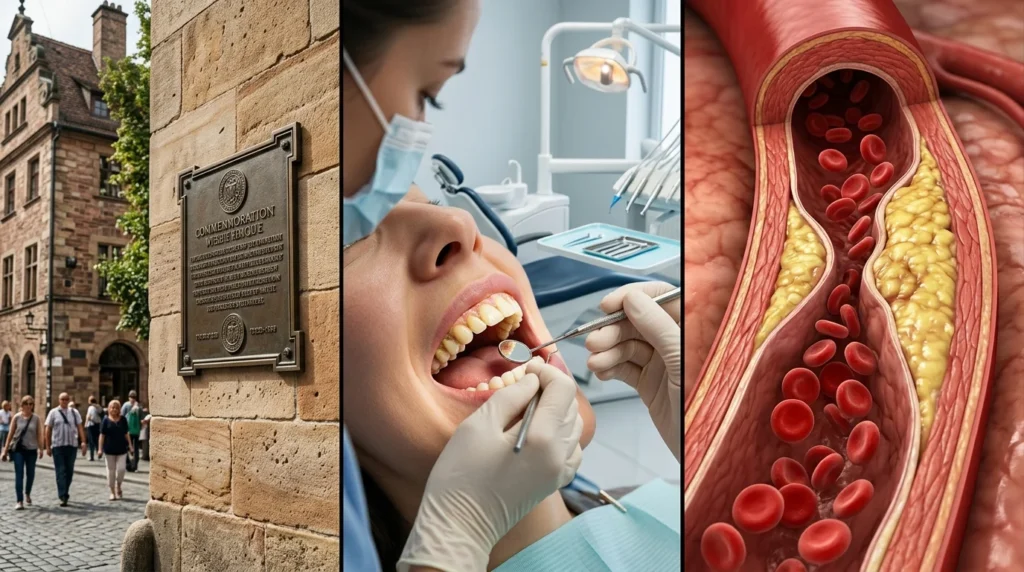
| Context | Meaning of Plaque | Example |
|---|---|---|
| Memorial | A flat marker with writing | The memorial plaque honors local soldiers. |
| Award | A plate given to recognize achievement | She received a plaque for her service. |
| History | A marker identifying a person, place, or event | A plaque marks the historic site. |
| Dentistry | Bacterial substance forming on teeth | Brushing helps remove dental plaque. |
| Medicine | A raised area or buildup in the body | The doctor explained the plaque found in the artery. |
Although these meanings are different, their standard spelling is the same: plaque.
Real-Life Situations
In an Interview
If you are discussing a professional achievement, you might say:
“I received a plaque for completing ten years with the company.”
In a Meeting
When discussing an office award, you could say:
“We need to approve the wording for the employee recognition plaque.”
In an Email
A natural professional sentence is:
“Please send me the final text for the commemorative plaque before Friday.”
In a Text Message
You might casually write:
“The plaque looks great! Thanks for sending the photo.”
At the Dentist
A patient might say:
“I want to learn more about how to prevent plaque buildup.”
In an Exam
If a spelling exercise asks you to choose between placque and plaque, choose plaque.
How to Remember the Spelling
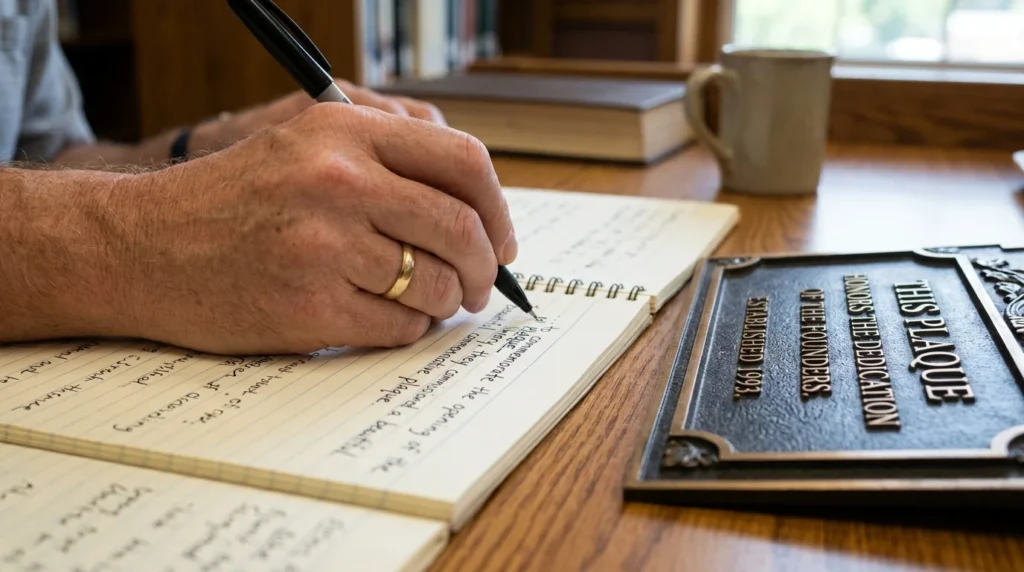
Use the simple mnemonic:
“Plaque has Q, U, E — but no extra C.”
Think of the spelling as one compact unit:
PLA + QUE = PLAQUE
Do not insert another c between A and Q.
- Start with PLA.
- Add QUE.
- Check that there is no extra C.
- Write PLAQUE.
See Also: WYGG Meaning in Text: What It Means & How to Use It
Mini Quiz
- Which spelling is standard: placque or plaque?
- How do you spell the plural of plaque?
- Which spelling should you use for dental buildup?
- Which spelling should you use for a memorial marker?
- Is placque a standard modern alternative to plaque?
Answers: 1. Plaque. 2. Plaques. 3. Plaque. 4. Plaque. 5. No. In ordinary modern English, use plaque.
Frequently Asked Questions
Is it placque or plaque?
Plaque is the standard modern spelling. Placque is generally a misspelling when the intended word is plaque.
How do you spell plaque correctly?
The correct spelling is P-L-A-Q-U-E: plaque.
Is placque a word?
In ordinary modern English, placque should not be used as an alternative spelling of plaque. Major current dictionary results clearly establish plaque for the common meanings discussed here.
What does plaque mean?
Plaque can mean a flat object with writing attached to a wall or another surface, bacterial material that forms on teeth, or a specialized medical raised area or buildup.
What is the plural of plaque?
The standard plural is plaques. For example: “The museum displayed several commemorative plaques.”
Is dental placque correct?
No. The standard expression is dental plaque. The extra c in placque is not needed.
Is commemorative placque correct?
No. The standard phrase is commemorative plaque. A plaque can be a flat marker attached to a building, monument, or other surface.
Why is plaque spelled with “que”?
The spelling reflects the word’s historical development and its French connection. English has retained the -que spelling even though the pronunciation does not make every letter obvious. The practical point for modern writers is to memorize the established form: plaque.
Is plaque pronounced “plak”?
In US English, Cambridge gives /plæk/, which is close to “plak.” UK English may use /plɑːk/ or /plæk/. The spelling is plaque in either case.
Is plaque countable or uncountable?
It depends on the meaning. A physical commemorative plaque is countable, so you can say a plaque or several plaques. Dental plaque is commonly uncountable when referring to the substance. Medical usage can vary according to the specific meaning and context.
Does placque have a different meaning from plaque?
Not in ordinary modern English. When someone writes placque, they generally intend plaque. The extra c does not create a useful everyday distinction.
Quick Summary
Plaque is the standard spelling in modern English, while placque is generally a misspelling. Plaque has several meanings: it can be a flat commemorative or decorative object, the bacterial substance that forms on teeth, or a specialized medical raised area or buildup. The spelling stays plaque across these contexts. There is no standard American-versus-British spelling difference, although pronunciation can vary by accent. If you are writing about a memorial plaque, award plaque, dental plaque, or medical plaque, do not add an extra c. Remember the simple pattern: PLA + QUE = PLAQUE.