
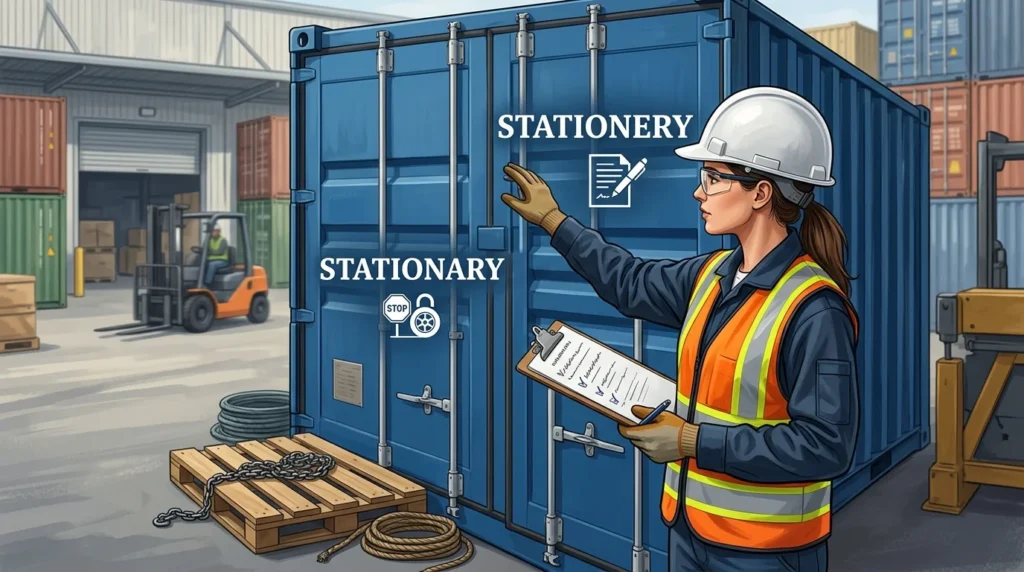

Conex and connex can both refer to a large metal cargo or shipping container, especially one associated with military, storage, and transportation use. However, CONEX is the original U.S. military abbreviation for Container Express, while connex developed as a respelling and is also recognized as a dictionary form for the container. The two spellings are therefore closely related rather than simply “correct” versus “incorrect.”
Quick Answer
Conex and connex can both be used for a large metal cargo or storage container. If you are referring specifically to the historical U.S. military system, CONEX is the original form and stands for Container Express. Connex is an established respelling that dictionaries also use for the same general type of military cargo container. For modern general writing, shipping container is often the clearest term for an international audience.
What Is the Difference Between Conex and Connex?
The main difference is their spelling history and usage, not the physical object they normally describe.
CONEX comes from Container Express. U.S. Army sources use CONEX for the container-express system and describe CONEX containers as large metal containers used to transport supplies. The Army continues to use the term today.
Connex is a recognized spelling as well. Collins defines connex as a large metal cargo container used by the U.S. Army, and Dictionary.com likewise gives the word for a large U.S. Army cargo container. Dictionary.com identifies it as a respelling of conex.
So, if someone writes “connex box” instead of “conex box,” they are not necessarily making a simple spelling error. The context determines whether the form is appropriate.
Why Does the Difference Matter?
The distinction matters because CONEX has a specific historical and military origin, while connex can represent an established variant spelling. In addition, both forms can appear in modern construction, storage, logistics, and transportation contexts.
Choosing the right form can make your writing clearer, particularly when you are writing for people outside the industry.
For example:
“The equipment was stored in a CONEX container.”
This wording clearly connects the term with the historical military container system.
For a general audience, however:
“The equipment was stored in a shipping container.”
may be clearer because not every reader will know what CONEX means.
The Core Rule
Use CONEX when you want the original military term “Container Express.” Connex is also an established spelling for the cargo-container noun. Use “shipping container” when you want maximum clarity for a general audience.
A simple way to remember the original form is:
CONtainer + EXpress = CONEX
The U.S. Army’s transportation terminology explicitly defines CONEX as “Container Express.”
How to Use Conex and Connex
Use CONEX for the Historical Military Term
When discussing the U.S. military’s container-express system, CONEX is the historically appropriate form.
For example:
- The Army used CONEX containers to transport supplies.
- The historical CONEX system improved military logistics.
- The shipment was loaded into a CONEX container.
- The unit used CONEX boxes for temporary storage.
Official Army historical material identifies CONEX as “container express” and describes the containers as large metal units used to transport supplies.
Use Connex When Following an Established Variant
Connex is also found in dictionary usage for the cargo-container meaning. If a company, publication, or established document consistently uses connex, changing it automatically to conex may not be necessary.
Collins and Dictionary.com both record connex as a noun for a large metal U.S. Army cargo container.
Use Shipping Container for Maximum Clarity
If your readers may not know military or construction terminology, shipping container is often the clearest choice.
For example:
“The company delivered a 20-foot shipping container to the construction site.”
This sentence does not require the reader to understand either conex or connex.
Correct Examples
Military Writing
“The Army used CONEX containers to move supplies during overseas operations.”
Historical Writing
“The CONEX system played an important role in military logistics.”
Construction
“The tools were stored inside a Conex box at the construction site.”
Storage
“We rented a Conex container for temporary equipment storage.”
General Business Writing
“The supplier delivered a steel shipping container on Monday.”
Logistics
“The cargo was secured inside a CONEX container before transportation.”
Informal Workplace Conversation
“Put the spare materials in the connex by the loading area.”
Academic Writing
“The development of the CONEX system changed the handling of military supplies.”
Product Description
“This steel storage container can be used for tools, machinery, and other equipment.”
Historical Research
“Army records describe CONEX as an abbreviation for Container Express.”
Conex vs Connex: Incorrect vs. Correct Usage
| Less Suitable | Better Choice | Why |
|---|---|---|
| CONEX means connected export. | CONEX refers to Container Express. | The established military expansion is Container Express. |
| Connex is always a spelling mistake. | Connex is an established variant spelling. | Dictionaries record connex as a cargo-container noun. |
| The historical system was called CONNEX. | The historical system was called CONEX. | Official U.S. military sources use CONEX for Container Express. |
| Every modern shipping container is technically a CONEX. | A modern shipping container may be called a Conex in everyday usage. | The historical CONEX system and modern commercial shipping containers are related but not identical concepts. |
| Use connex because conex is wrong. | Both forms can occur for the container term. | The two spellings have documented usage. |
| Use CONEX in every situation. | Use shipping container when general clarity matters. | Readers unfamiliar with military terminology may understand the broader term more easily. |
| The Army never uses CONEX anymore. | The Army still uses CONEX in current logistics contexts. | Recent Army material continues to use the term. |
| Conex and shipping container always mean exactly the same thing. | Conex and shipping container can overlap in modern usage. | CONEX has a specific military origin, while shipping container is a broader modern term. |
| Connex has only one possible meaning. | Connex can have different meanings depending on context. | It can be a cargo-container noun, proper name, or specialized term. |
| The extra n proves that connex is a completely different container. | The extra n does not normally identify a different container type. | Connex is documented as a spelling variant of the container term. |
| CONEX is the only spelling ever found. | CONEX and connex are both documented. | Dictionary and real-world sources show both forms. |
| All websites should use connex. | Choose the spelling that matches your audience and context. | Historical, industry, brand, and general-audience contexts may call for different wording. |
Why Do People Confuse Conex and Connex?
The Words Sound Almost Identical
The pronunciation is a major reason for the confusion. If someone hears the word before seeing it written, there is no obvious way to know whether the written form contains one n or two.
Cambridge gives connex a pronunciation of /ˈkɒn.eks/ in British English and /ˈkɑː.neks/ in American English.
The Double N Looks Familiar
English contains many words with double consonants, so connex can look natural to someone who has only heard the term spoken.
The opposite can also happen. Someone who knows the historical abbreviation may expect CONEX because it comes from Container Express.
Industry Usage Varies
Different industries and businesses may use different forms. Modern container companies commonly use both conex and connex in descriptions and branding. This means a writer can encounter both spellings repeatedly without one necessarily being a typographical error.
Brand Names Create Additional Confusion
Connex is also used in names of companies, services, and organizations. A proper name should retain the spelling chosen by the organization rather than being “corrected” to Conex.
Search Engines Show Both Forms
Because both spellings occur online, search results can reinforce the idea that they are competing spellings. In this case, that observation is reasonable: both forms have documented usage, although their history and contexts differ.
Common Mistakes Checklist
- Calling connex completely wrong: Connex is documented as a noun for a military cargo container.
- Calling the two forms completely different objects: In container contexts, they generally refer to closely related usage.
- Forgetting the original meaning of CONEX: It comes from Container Express.
- Using CONEX without explaining it: A general audience may understand “shipping container” more easily.
- Changing a brand’s spelling: Keep official names exactly as their owners spell them.
- Assuming modern Conex containers are identical to historical military CONEX boxes: Modern commercial containers can differ from the original military equipment.
Conex and Connex in Real English
Grammatically Correct
Both conex and connex can function as nouns when they refer to the cargo-container concept. “The equipment was stored in a Conex” is grammatically straightforward. “The equipment was stored in a connex” can also be grammatical when the writer is using the documented variant spelling. The question is therefore not simply grammar; it is also about terminology, history, and preferred usage.
Technically Appropriate but Specialized
“The Army transported supplies in CONEX containers” is precise in a military-historical context, but the abbreviation may be unfamiliar to a general reader. A sentence such as “The Army transported supplies in large steel shipping containers” is easier for a broad audience. The more specialized form is useful when the historical or logistical terminology itself matters.
Natural Everyday English
In construction or storage settings, speakers may naturally say “Conex,” “Conex box,” or “shipping container.” Some speakers also use “connex.” The best choice depends on local and industry convention. For readers from different countries or industries, shipping container is generally more immediately understandable because it describes the object rather than relying on specialized terminology.
American vs. British English
There is no simple rule saying that American English uses conex while British English uses connex. The spellings are not a standard U.S.-versus-U.K. pair like color and colour.
The term CONEX has strong U.S. military roots, while connex is also recorded in American dictionaries as the cargo-container noun.
For international readers, shipping container or cargo container can be clearer than either specialized spelling.
Formal vs. Informal Usage
Formal and Technical Writing
In formal writing, choose the form that accurately reflects your subject.
Use CONEX when discussing the historical U.S. military container system.
Use shipping container or intermodal container when discussing modern commercial transportation and the specialized military history is not relevant.
If a source or organization officially uses connex, retain that spelling when referring to that specific entity or terminology.
Informal Writing
In workplace conversations, classified listings, text messages, and construction discussions, Conex and connex can both appear.
For example:
“The tools are in the Conex.”
“The tools are in the connex.”
Both may be understood by people familiar with the industry. For edited public-facing content, however, adding box or using shipping container can improve clarity.
See Also: LMAO Meaning in Text: What It Means & How to Use It
Conex vs. Connex vs. Shipping Container
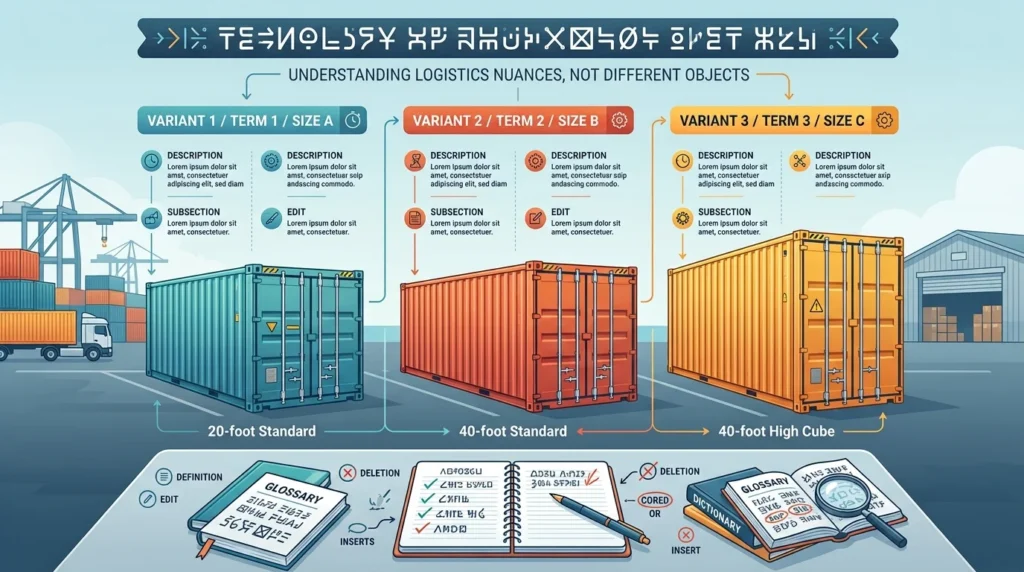
| Feature | Conex / CONEX | Connex | Shipping Container |
|---|---|---|---|
| Basic reference | Container Express / cargo container | Cargo-container noun or variant | General cargo container |
| Historical origin | U.S. military Container Express | Respelling of conex | Broader transportation terminology |
| Documented? | Yes | Yes | Yes |
| Military use | Strong | Documented | General term |
| Construction use | Common in some regions | Also encountered | Common |
| Best for historical writing | CONEX | Less precise | Possible but less specific |
| Best for general readers | May need explanation | May need explanation | Usually clearest |
| Can be a proper name? | Yes, depending on context | Yes | Rarely |
Conex vs. Connex: What Does Each One Mean?
What Does Conex Mean?
CONEX is an abbreviation associated with Container Express, the U.S. military container system developed for transporting supplies. The Army’s historical materials describe CONEX containers as large metal containers used for supply transportation, and current Army publications continue to use the term.
What Does Connex Mean?
Connex can refer to the same general type of large military cargo container. Collins and Dictionary.com both record this noun, with Dictionary.com describing its origin as an apparent respelling of conex.
Are They Different Types of Containers?
Normally, no. The spelling difference does not by itself identify two different physical container designs. If a seller advertises a “Conex box” and another advertises a “connex box,” the spelling alone does not establish that the products are different.
When purchasing or identifying equipment, check the actual dimensions, construction, condition, specifications, and intended use rather than relying only on the spelling.
Real-Life Situations
Job Interview
“Our team stored equipment in a Conex container at the worksite.”
This is a natural industry-oriented answer.
Construction Meeting
“The Conex needs to be moved before the concrete work begins.”
In a construction setting, people familiar with the term can understand the shortened noun from context.
Business Email
“Please confirm whether the shipping container will arrive on Friday.”
This is often better for an international or general business audience because the meaning is immediately clear.
Historical Research
“The U.S. Army developed the CONEX system to improve the transportation of supplies.”
Here, the capitalized historical abbreviation is appropriate.
Product Listing
“20-foot steel shipping container suitable for storage and equipment protection.”
A product listing can use the broader term when the target customer may not know specialized container vocabulary.
Text Message
“The boxes are in the connex behind the warehouse.”
This can be understood in a context where the spelling variant is familiar.
Easy Way to Remember Conex

The simplest memory trick is:
CONtainer + EXpress = CONEX
Think of the original military abbreviation as two shortened pieces:
- CON = container
- EX = express
- CON + EX = CONEX
The U.S. Army’s transportation documentation directly identifies CONEX as Container Express.
For connex, remember that the extra n is an established respelling rather than evidence that it describes a completely different container.
Simple Decision Guide
- If you are discussing the historical military system, use CONEX.
- If you are referring to a cargo container in general industry usage, Conex is widely used.
- If your source or organization uses connex, keep its established spelling when appropriate.
- If your audience may not know the term, use shipping container.
- If you are referring to a brand or organization named Connex, preserve its official spelling.
- Do not assume that the extra n automatically makes connex incorrect.
Mini Quiz: Conex or Connex?
Question 1
What does CONEX originally refer to?
A) Connected Export
B) Container Express
C) Construction Exchange
Answer: B) Container Express.
Question 2
Is connex always a spelling mistake?
Answer: No. Connex is a documented spelling for the cargo-container noun and can also occur in proper names.
Question 3
Which form is especially appropriate for historical U.S. military writing?
Answer: CONEX.
Question 4
What is the clearest term for a general international audience?
Answer: Shipping container.
Question 5
Does the extra “n” in connex automatically mean it is a different container?
Answer: No.
Question 6
Can Connex be a proper name?
Answer: Yes. Companies, services, and organizations may intentionally use Connex as their official name.
Question 7
Which spelling comes directly from “Container Express”?
Answer: CONEX.
Question 8
Are Conex and shipping container always technically identical terms?
Answer: No. Conex has a specific military origin, while shipping container is a broader modern term.
Frequently Asked Questions
Is Conex or Connex the correct spelling?
Both spellings are documented for the cargo-container meaning. CONEX is the original U.S. military abbreviation for Container Express, while connex is an established respelling recorded by dictionaries.
What does CONEX stand for?
CONEX stands for Container Express. U.S. transportation documentation explicitly expands the abbreviation as “CONEX – Container Express,” and Army historical sources use the same expansion.
Is Connex a real word?
Yes. Connex is recorded as a noun for a large metal cargo container used by the U.S. Army. It can also occur in other specialized contexts and as part of proper names.
Is Conex a real word?
Yes. Conex is widely used as the shortened form of CONEX and as a name for cargo or storage containers. The original abbreviation is tied to Container Express, and U.S. military sources continue to use CONEX today.
Is a Conex box the same as a shipping container?
They can refer to the same general type of steel container in modern everyday usage, especially in storage and construction. However, CONEX has a specific historical military origin, while “shipping container” is a broader modern term.
Why is it spelled Conex instead of Connex?
The original abbreviation is based on CON from container and EX from express. That produces CONEX. The double-n form developed later as a respelling and is also documented in dictionaries.
Why do people spell Conex as Connex?
The two forms have essentially the same pronunciation, making the spelling difficult to distinguish by ear. Connex is also a documented respelling rather than merely an invented typo, which helps explain why both forms appear in real-world writing.
Should I write CONEX or Conex?
Use CONEX when emphasizing the abbreviation or historical military system. Conex is common as the lowercase-style name for the container in modern industry writing. Follow the capitalization style required by your publication or organization.
Is Connex a different type of container?
Not simply because it has two n’s. The spelling itself does not establish a different physical container type. When comparing actual containers, look at their dimensions, materials, specifications, condition, and intended use.
Is Connex British English and Conex American English?
No. They are not a standard British-versus-American spelling pair. CONEX has strong U.S. military origins, but connex is also documented in American dictionaries. The choice is more about terminology, history, and context than a simple national spelling rule.
Which term is best for a website article?
If the audience is familiar with construction, storage, or logistics, Conex or CONEX may be appropriate. For a broad international audience, shipping container is usually clearer. You can introduce both terms when explaining the terminology.
Can Connex be a company name?
Yes. Connex can appear as an official company, organization, service, or product name. When it is a proper name, preserve the exact spelling chosen by the organization rather than changing it to Conex.
Quick Summary
Conex and connex are closely related terms used for large cargo or storage containers, but they have different spelling histories. CONEX is the original U.S. military abbreviation for Container Express, and official Army sources still use it. Connex is also a documented spelling for the cargo-container noun, so it is not accurate to label every use of it a simple misspelling. In modern construction and storage, both forms may be encountered. For a broad audience, shipping container is often clearer. When discussing the historical military system, use CONEX. When referring to an official name, always follow that organization’s chosen spelling.
See Also: IDGAF Meaning in Text: What It Means & How to Use It