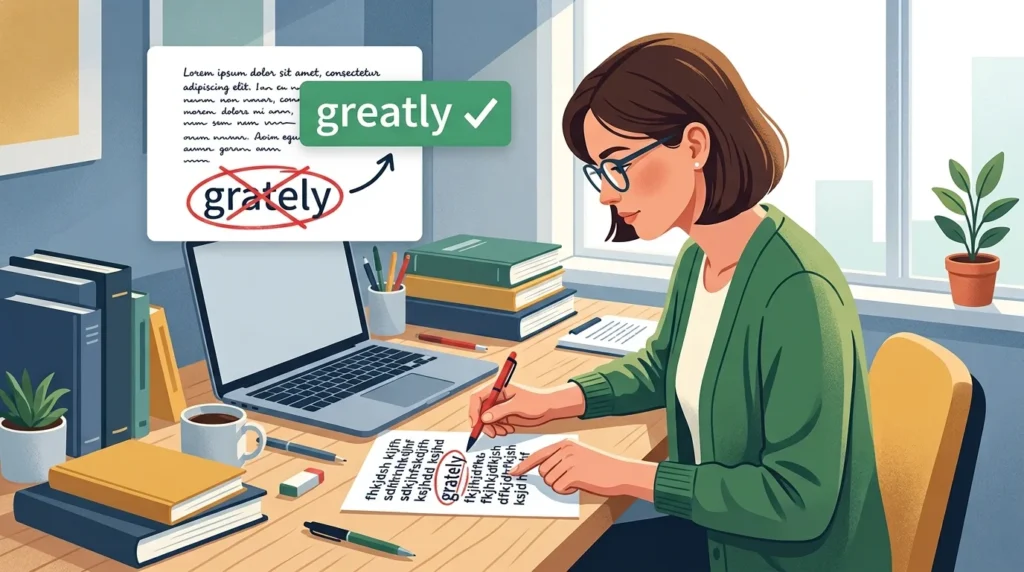

Greatly is the correct spelling, while grately is not the standard English form when you mean “very much,” “significantly,” or “to a great degree.” The correct word is the adverb greatly, formed from great + -ly. For example, “I greatly appreciate your help” is correct. “I grately appreciate your help” is a spelling mistake.
Quick Answer
Greatly is the correct English word. Grately is a misspelling when it is intended to mean “very much,” “significantly,” or “to a great extent.” Greatly is an adverb used to show a high degree or strong effect, as in “The changes greatly improved the system.” Remember the spelling as great + ly = greatly. The e in great stays in the word.
What Is the Difference Between Grately and Greatly?
The difference is straightforward: greatly is a standard English adverb, while grately is not the standard spelling for this meaning.
Greatly means “very much,” “to a great extent,” or “to a high degree.” It can describe the strength or extent of an action, feeling, effect, or change. Cambridge Dictionary defines greatly as an adverb meaning “very much,” particularly when showing how much someone feels or experiences something.
For example:
- I greatly appreciate your support.
- The new policy greatly improved the process.
- She was greatly affected by the experience.
If you are choosing between grately and greatly, use greatly.
Why It Matters
A spelling mistake such as grately usually does not make a sentence impossible to understand. Most readers can work out what you intended. However, standard spelling matters in situations where your writing represents you professionally or academically.
Using the correct form is especially important in:
- Business emails
- Job applications
- Academic assignments
- Professional reports
- Website content
- Formal letters
- Exams and written assessments
Compare these sentences:
❌ We grately appreciate your continued support.
✅ We greatly appreciate your continued support.
The second sentence uses the established English spelling and reads naturally in professional communication.
The Core Rule
Use “greatly” when you mean “very much,” “significantly,” or “to a great extent.” Do not use “grately” as the spelling of this adverb.
The easiest spelling formula is:
great + ly = greatly
The final e in great remains:
- great → greatly ✅
- grate → grately ❌ when you mean “very much”
The important point is that greatly is built from great, not from grate.
See Also: Atleast or At Least: Which Is Correct?
How to Use “Greatly” Correctly
Use “Greatly” to Show a High Degree
Greatly can show that something happens or changes to a significant degree.
For example:
“The new software greatly improved our workflow.”
Here, greatly tells the reader that the improvement was substantial.
Use “Greatly” With Verbs
Greatly commonly modifies verbs or verb phrases.
- The training greatly improved her skills.
- The decision greatly affected the company.
- His advice greatly helped me.
- The experience greatly influenced her career.
- The discovery greatly changed scientific thinking.
Use “Greatly” to Express Strong Feelings
Greatly can also describe the strength of a feeling or response.
Examples include:
- I greatly admire your determination.
- We greatly appreciate your assistance.
- She greatly regretted the decision.
- They greatly enjoyed the event.
- He greatly missed his old friends.
Cambridge provides examples such as “I greatly regret…” and “I feel that I have benefited greatly…” to illustrate this use.
Correct Examples of “Greatly”
Conversation
“I greatly appreciate everything you did for me.”
“We greatly appreciate your patience while we resolve this issue.”
School
“The teacher’s explanation greatly improved my understanding of the topic.”
Workplace
“The updated process has greatly reduced the amount of paperwork.”
Academic Writing
“The development of digital technology has greatly influenced modern education.”
Social Media
“Your kind messages have greatly encouraged me.”
Job Application
“I would greatly appreciate the opportunity to discuss my experience further.”
Formal Letter
“Your assistance in this matter would be greatly appreciated.”
Personal Writing
“I greatly value the time we spent working together.”
News or General Writing
“The new approach greatly improved access to the service.”
Grately vs Greatly: Incorrect vs Correct
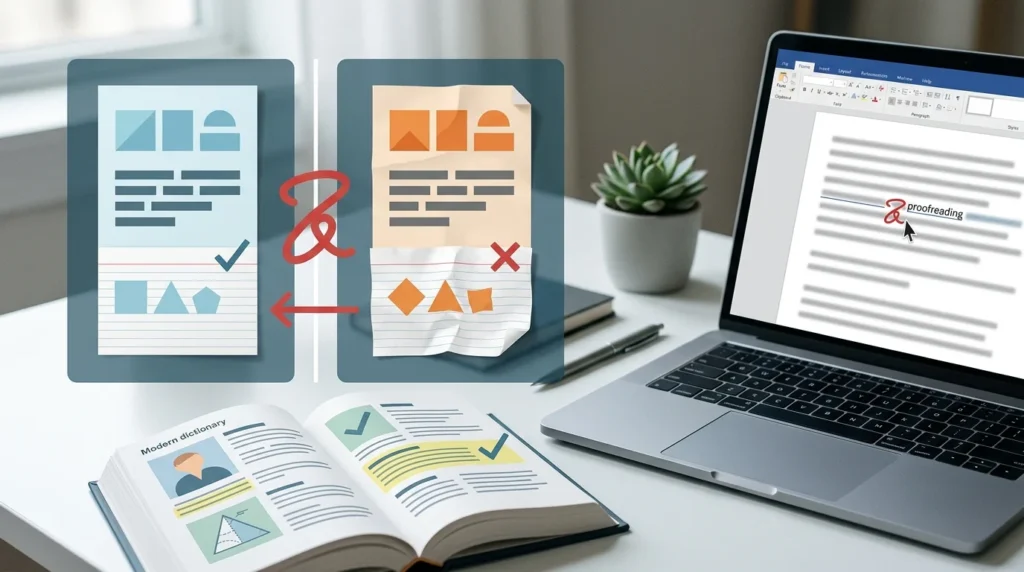
| Incorrect | Correct | Why |
|---|---|---|
| I grately appreciate your help. | I greatly appreciate your help. | Greatly is the standard adverb; grately is a misspelling. |
| The changes grately improved the system. | The changes greatly improved the system. | The word describing the extent of the improvement is greatly. |
| She was grately affected by the news. | She was greatly affected by the news. | Greatly correctly shows the degree of the effect. |
| We grately value your feedback. | We greatly value your feedback. | The established expression uses greatly. |
| He grately admired his mentor. | He greatly admired his mentor. | Greatly modifies the verb admired. |
| The change grately reduced costs. | The change greatly reduced costs. | Greatly indicates a significant reduction. |
| I grately enjoyed the presentation. | I greatly enjoyed the presentation. | The correct adverb is greatly. |
| Your support is grately appreciated. | Your support is greatly appreciated. | Greatly appreciated is the standard phrase. |
| The experience grately influenced me. | The experience greatly influenced me. | Greatly correctly modifies influenced. |
| She grately benefited from the course. | She greatly benefited from the course. | The standard spelling is greatly. |
| The discovery grately changed the field. | The discovery greatly changed the field. | Greatly describes the extent of the change. |
| We grately regret the delay. | We greatly regret the delay. | The correct adverb is greatly. |
Why Do People Write “Grately”?
Sound-Based Spelling
One reason for the mistake is pronunciation. Greatly is pronounced /ˈɡreɪt.li/, so the first part sounds like great or the separate word grate. Cambridge gives the pronunciation as /ˈɡreɪt.li/.
Because grate is itself a real English word, a writer may unconsciously construct grately as though it were grate + ly.
Fast Typing
When people type quickly, small spelling errors can slip through. Because grately looks close to greatly, the missing e may not be noticed during a quick review.
Overgeneralizing Spelling Patterns
English has many different spelling patterns when words take suffixes. Learners may assume that adding -ly always involves changing the spelling of the base word.
That assumption does not work here. The useful pattern is simply:
great + ly → greatly
Autocorrect and Spellcheck
Spellcheck can help, but it should not replace proofreading. Digital tools may identify obvious misspellings, but writers can still miss errors or accept an unwanted correction without noticing.
Translation Interference
Some English learners may also spell words according to the spelling pattern or pronunciation of another language. This can make an English form such as grately seem logical even though standard English uses greatly.
Common Mistakes Checklist
- Writing grately instead of greatly: Remember that the correct form is greatly.
- Removing the e from great: Keep the complete word great before adding -ly.
- Assuming grate is the base: The relevant base word is great, not grate.
- Trusting pronunciation alone: Spell the word based on its established written form, not only how it sounds.
- Skipping proofreading: Give spelling mistakes a final check before sending professional or academic writing.
Greatly in Real English
Grammatically Correct and Natural
Greatly is grammatically correct and natural in sentences such as “I greatly appreciate your help,” “The change greatly improved efficiency,” and “She greatly benefited from the experience.” It is particularly natural when the writer wants to emphasize degree or intensity. Cambridge lists uses such as “greatly improved,” “greatly appreciated,” and “benefited greatly.”
Correct but More Formal-Sounding
Some sentences containing greatly are completely natural but may sound more polished or formal than everyday alternatives. For example, “I greatly appreciate your assistance” is correct, while “I really appreciate your help” may sound more conversational. The choice depends on the setting, relationship, and tone you want.
Incorrect: Grately
Grately is not the standard form to use when you mean “very much” or “to a great extent.” If you see it in an edited sentence with this intended meaning, the appropriate correction is normally greatly. The issue is spelling rather than a meaningful difference between two standard English words.
American vs British English
There is no meaningful American-versus-British spelling difference for greatly. Both American and British English use greatly.
| English Variety | Correct Form |
|---|---|
| American English | greatly |
| British English | greatly |
Cambridge lists the same word and pronunciation for both UK and US English.
Formal vs Informal Usage
Greatly works in both formal and informal English, but it can sound more polished than simpler alternatives in casual conversation.
Formal Example
“We greatly appreciate your cooperation throughout the project.”
Neutral Example
“I greatly appreciate your help.”
More Casual Alternative
“I really appreciate your help.”
All three can communicate appreciation. The difference is mainly one of style and emphasis. Greatly is not limited to formal writing.
Greatly vs Really vs Very Much
| Word or Phrase | Basic Meaning | Typical Use |
|---|---|---|
| Greatly | To a high degree; very much | Formal, neutral, and general writing |
| Really | Very; genuinely | Common in everyday conversation |
| Very much | To a considerable degree | Common in everyday English |
For example:
“I greatly appreciate your help.”
“I really appreciate your help.”
“I appreciate your help very much.”
These sentences can all express strong appreciation, although their tone and word order differ.
Greatly vs Grately: Comparison Table
| Feature | Greatly | Grately |
|---|---|---|
| Standard English word? | Yes | No, when intended as the spelling of this adverb |
| Correct spelling? | Yes | No |
| Part of speech | Adverb | Not a standard adverb in this usage |
| Meaning | Very much; to a great degree | No standard meaning in this usage |
| Base word | Great | Incorrectly treated as if it came from grate |
| Professional writing | Correct | Avoid |
| Academic writing | Correct | Avoid |
| Common phrase | Greatly appreciated | None |
Real-Life Situations
Job Interview
“I greatly appreciate the opportunity to speak with you today.”
Here, greatly works naturally in a professional expression of appreciation.
Business Meeting
“The updated process has greatly improved communication between the teams.”
Greatly shows the degree of improvement.
Business Email
“We greatly appreciate your patience while our team investigates the issue.”
This is a common professional use of the word.
Text Message
“I greatly appreciate you helping me today!”
The word is grammatically correct even in a text, although really appreciate may sound more casual.
School Exam
“The invention greatly changed the way people communicated.”
The spelling greatly is appropriate in formal written work.
Academic Paper
“The development of new research methods has greatly expanded the available evidence.”
Here, greatly indicates a substantial degree of expansion.
Easy Way to Remember Greatly
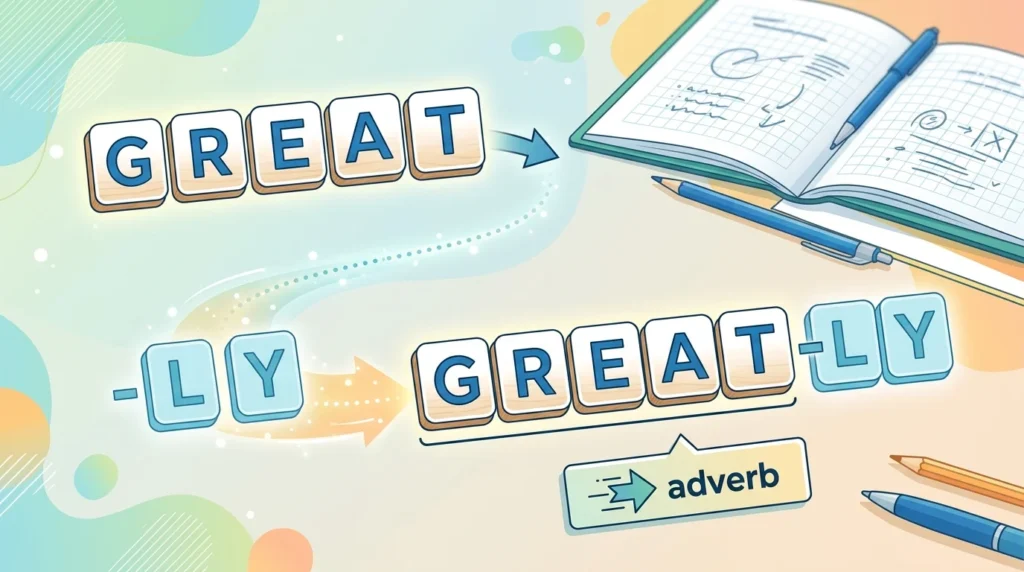
The simplest memory trick is:
GREAT + LY = GREATLY
Do not think of the word as grate + ly.
Remember:
If the sentence means “very much” or “to a great degree,” keep the word GREAT inside GREATLY.
Another useful phrase is:
“Great help is greatly appreciated.”
The word great stays intact when it becomes greatly.
Quick Decision Guide
- If you mean “very much,” use greatly.
- If you mean “to a high degree,” use greatly.
- If you mean “significantly,” greatly may be appropriate depending on the sentence.
- If you have written grately, check whether you intended greatly.
- Remember the spelling as great + ly = greatly.
Mini Quiz: Grately or Greatly?
Question 1
Which spelling is correct?
A) Grately
B) Greatly
Answer: B) Greatly.
Question 2
Complete the sentence: “We ___ appreciate your support.”
Answer: greatly.
Question 3
Which sentence is correct?
A) The change grately improved the service.
B) The change greatly improved the service.
Answer: B.
Question 4
What does “greatly” usually express?
Answer: A high degree, strong effect, or very much.
Question 5
What is the correct spelling formula?
A) grate + ly
B) great + ly
Answer: B) great + ly.
Question 6
Correct this sentence: “Your assistance would be grately appreciated.”
Answer: “Your assistance would be greatly appreciated.”
Question 7
Is “grately” the British spelling of “greatly”?
Answer: No. British English also uses greatly.
Question 8
Which sentence is correct?
A) I greatly admire her work.
B) I grately admire her work.
Answer: A.
Frequently Asked Questions
Is grately a correct English word?
No. When you intend to use the adverb meaning “very much” or “to a great extent,” grately is not the standard English spelling. Use greatly.
What does greatly mean?
Greatly is an adverb meaning “very much,” “to a great degree,” or “to a large extent.” It can describe the strength or extent of an action, feeling, or change.
Is greatly an adverb?
Yes. Greatly is an adverb. It commonly modifies verbs or verb phrases, as in “greatly improved,” “greatly appreciated,” and “greatly influenced.”
Why is grately wrong?
Grately is wrong when it is being used as a spelling of greatly because the standard adverb is formed from great: great + ly = greatly.
Is “greatly appreciated” correct?
Yes. Greatly appreciated is a standard and widely used expression. For example: “Your assistance is greatly appreciated.” Cambridge also gives “it would be greatly appreciated” as an example of normal usage.
Can I use greatly in casual conversation?
Yes. Greatly is not restricted to formal writing. However, in very casual conversation, phrases such as really or very much may sometimes sound more conversational.
Is greatly the same in American and British English?
Yes. There is no spelling change between American and British English for greatly. Both use greatly.
Can greatly mean significantly?
Yes. In suitable contexts, greatly can indicate a substantial degree or effect. For example, “The changes greatly reduced costs” means that the reduction in costs was substantial.
What is the easiest way to remember greatly?
Remember great + ly = greatly. Keep the complete word great before adding -ly. If you are tempted to write grately, check whether you accidentally replaced great with grate.
Is “I greatly appreciate it” correct?
Yes. “I greatly appreciate it” is grammatically correct and natural. It expresses strong appreciation and can work in both professional and personal communication.
What should I write instead of grately?
If you mean “very much,” “significantly,” or “to a great extent,” write greatly. There is normally no need to replace it with another word unless you specifically want a different tone.
Quick Summary
Greatly is the correct English spelling, while grately is a misspelling when it is intended to express “very much,” “significantly,” or “to a great extent.” Greatly is an adverb that commonly describes the degree or strength of an action, feeling, effect, or change. You can use it in sentences such as “I greatly appreciate your help,” “The update greatly improved performance,” and “She greatly benefited from the experience.” The easiest way to remember the spelling is great + ly = greatly. The e in great stays in the word. American and British English both use greatly, so there is no regional spelling difference to remember.
See Also: IONK Meaning in Text: What It Means & How to Use It