

Crier is the standard spelling in modern English when you mean a person who cries or someone who makes a public announcement, such as a town crier. Cryer is much less common and may appear as a historical variant or as a surname.
Quick Answer
If you are wondering whether to write crier or cryer, choose crier for normal modern English writing.
- Crier = a person who cries or a person who publicly calls out announcements.
- Town crier = a person who traditionally announces news or official information publicly.
- Cryer = an uncommon variant, historical spelling, or surname.
For school assignments, professional writing, articles, emails, and everyday English, crier is the familiar standard form.
What Does Crier Mean?
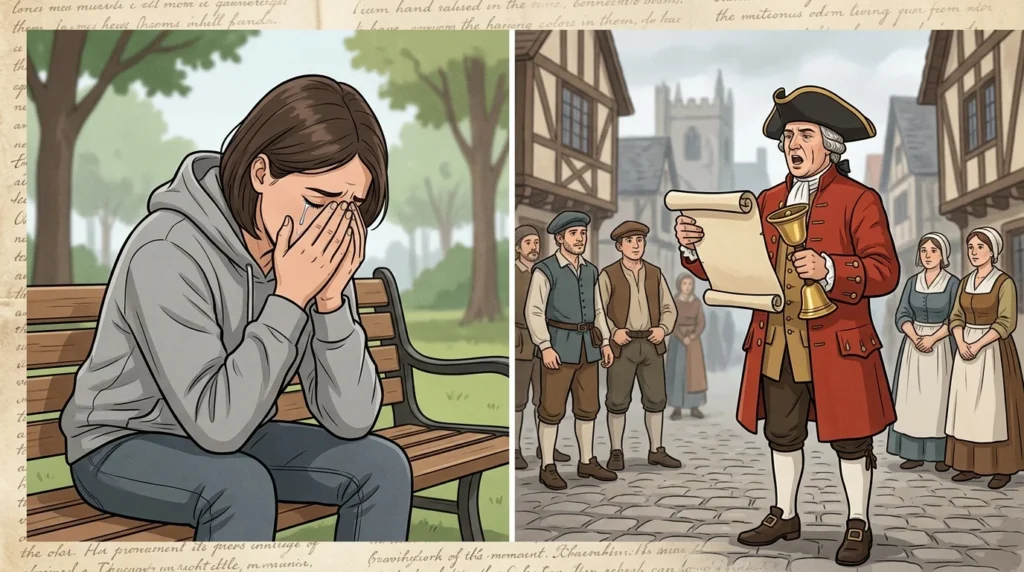
Crier is a noun related to the verb cry. It can refer to someone who cries, especially someone who cries easily or frequently. It can also refer to someone who calls out or makes announcements publicly.
For example, if someone says, “I am a crier,” they mean that they tend to cry easily or often.
The word also appears in the traditional expression town crier. A town crier was a person who publicly announced news, laws, events, or official information, often by calling out in a public place.
Crier Meaning: Someone Who Cries
In everyday English, a crier can be someone who cries easily or frequently.
For example:
- She is a crier when she watches emotional movies.
- My baby is a very loud crier.
- He has always been a sensitive crier.
Crier Meaning: Public Announcer
Crier also has a historical meaning. A town crier traditionally announced public information aloud so that people in the community could hear it.
For example:
The town crier announced the news in the village square.
This meaning is still recognized today, especially in historical writing and the familiar phrase town crier.
What Does Cryer Mean?
Cryer is a real form that has appeared in English, but it is not the usual spelling for the ordinary modern noun. Historical sources contain cryer as a variant of crier, and the form can also occur as a surname.
Therefore, it is too simplistic to say that cryer can never exist. However, if you are writing a normal modern sentence about someone who cries, crier is the appropriate choice.
For example:
Preferred: She is a frequent crier.
Less common/historical: The old document used the spelling cryer.
Crier vs Cryer: The Core Rule
The easiest rule is:
Use “crier” when you mean a person who cries or a person who makes public announcements. Use “cryer” only when the specific context calls for that spelling, such as a surname or historical text.
Modern English generally uses crier. Grammarist also identifies crier as the preferred spelling in modern varieties of English and notes that cryer can be found in older texts.
Why Is It Crier Instead of Cryer?
This spelling can seem strange because the base verb is cry. It is natural to think that adding -er should produce cryer.
However, English spelling often changes a final y to i before certain suffixes.
- cry → crier
- carry → carrier
- marry → marrier
- try → trier
- hurry → hurrier
There are spelling exceptions and different suffix rules across English, so it is useful to learn established word forms rather than assuming every verb simply keeps its original spelling.
How to Use Crier Correctly
Use crier when describing a person who cries or when referring to a person who calls out announcements publicly.
Everyday Conversation
I am definitely a crier when I watch sad movies.
Talking About a Baby
The baby is a frequent crier during the night.
Talking About Emotions
She is a crier, especially during emotional moments.
Historical Writing
The town crier walked through the streets announcing the royal message.
Creative Writing
The old town crier gathered everyone around the square.
Correct Examples of Crier
- She is a natural crier during emotional movies.
- I have always been a crier at weddings.
- The baby became a loud crier after midnight.
- He is not much of a crier.
- My sister is an emotional crier.
- The town crier announced the festival.
- The crier called out the official announcement.
- Everyone gathered when the town crier began speaking.
- The historical story describes a royal crier.
- The crier announced the new rules to the crowd.
- She laughed and said she was a terrible crier.
- The town crier rang his bell before making the announcement.
Crier vs Cryer: Incorrect vs Correct Examples
| Incorrect or Less Preferred | Correct / Preferred | Why |
|---|---|---|
| She is a frequent cryer. | She is a frequent crier. | Crier is the standard modern spelling. |
| I am such a cryer. | I am such a crier. | The ordinary noun is spelled crier. |
| He is an emotional cryer. | He is an emotional crier. | Crier is the preferred form. |
| The baby is a loud cryer. | The baby is a loud crier. | Crier is the standard noun. |
| The town cryer announced the news. | The town crier announced the news. | The traditional expression is town crier. |
| She became a cryer during the movie. | She became a crier during the movie. | Crier is preferred in modern writing. |
| He has always been a cryer. | He has always been a crier. | Crier is the established modern spelling. |
| The cryer called everyone together. | The crier called everyone together. | Crier is used for a public announcer. |
| My sister is a natural cryer. | My sister is a natural crier. | Crier is the normal modern form. |
| The village cryer made an announcement. | The village crier made an announcement. | Crier is the preferred spelling. |
Why Do People Confuse Crier and Cryer?
They Sound the Same
The biggest reason for the confusion is pronunciation. Crier and cryer can sound the same, so someone who has only heard the word may not know which spelling to use.
Cry Makes Cryer Look Logical
The spelling cryer looks logical because the base word is cry. A writer may simply add -er and assume that the result is correct.
However, the established modern noun is crier.
People See Cryer as a Surname
Cryer is also used as a surname. Seeing it as a person’s last name can make the spelling appear more familiar than it is as a common noun.
Older English Uses Variant Spellings
Historical English contains spelling variations that are uncommon today. Cryer has been recorded as an older or variant form of crier.
Crier vs Cryer in Real English
Crier is the natural choice in modern everyday English when you mean someone who cries.
Cryer may be encountered in historical material or as a proper name. It should not normally replace crier in ordinary modern writing simply because it looks like a direct combination of cry + er.
For example:
Natural: “I am a crier when I watch emotional films.”
Unusual in modern writing: “I am a cryer when I watch emotional films.”
Correct as a name: “Cryer” may be retained when it is someone’s actual surname.
American vs British English
There is no important standard American-versus-British spelling distinction here. Crier is the preferred modern spelling in both varieties of English.
Therefore, you do not need to choose crier for American English and cryer for British English. That would be incorrect.
Formal vs Informal English
The spelling does not change based on whether the writing is formal or informal.
In both formal and casual writing, crier is the normal choice when referring to a person who cries.
- Formal: The study examined why some individuals identify themselves as frequent criers.
- Informal: I’m such a crier during sad movies.
Crier vs Cryer Comparison Table
| Feature | Crier | Cryer |
|---|---|---|
| Standard modern noun | Yes | Not the usual form |
| Person who cries | Yes | Historical/variant use |
| Public announcer | Yes | Historical variant |
| Town crier | Correct | Not the standard phrase |
| Historical spelling | Yes | May appear |
| Surname | Possible as a name | Yes, as an established surname |
| Best choice for modern writing | Yes | Usually no |
Real-Life Situations
Writing About Yourself
Use crier:
I’m a crier, so I always bring tissues to emotional movies.
Writing About a Child
Use crier:
The baby is becoming a quieter crier as she gets older.
Writing a Historical Story
Use crier in modern narration:
The town crier stood in the center of the square.
If you are quoting an original historical document that spells the word cryer, you may preserve that original spelling.
Writing Someone’s Name
If a person’s surname is actually Cryer, keep it exactly that way.
For example:
Mr. Cryer spoke at the meeting.
A proper name should not be changed simply because it resembles a different common-word spelling.
An Easy Way to Remember Crier vs Cryer

Remember this simple rule:
Someone who cries is a crier.
Think of the word cries:
cry → cries → crier
When you mean the ordinary modern noun, choose the spelling with i:
CRIER = standard modern spelling.
If you see Cryer with a capital letter, check whether it is a person’s surname. If you are reading an old document, it may also be a historical spelling.
Common Mistakes to Avoid
- Do not automatically write cryer because the base verb is cry.
- Use crier for someone who cries in ordinary modern English.
- Write town crier, not usually “town cryer.”
- Do not assume that seeing Cryer as a surname makes it the standard common noun.
- When quoting an old source, preserve its original spelling when appropriate.
- Remember that pronunciation alone cannot tell you whether the word is spelled crier or cryer.
Frequently Asked Questions
Is crier or cryer correct?
Crier is the standard modern spelling when you mean a person who cries or a person who publicly announces something. Cryer is much less common and can occur as a historical variant or surname.
Is cryer a real word?
Yes, cryer has existed as a variant or historical spelling of crier. It can also appear as a surname. It is not, however, the normal spelling to use for the common modern noun.
What is a person who cries called?
A person who cries can be called a crier. For example, “She is a frequent crier” means that she cries often or easily.
What is a town crier?
A town crier is a person who traditionally announced public news, laws, events, or other information aloud. The spelling town crier is the standard modern form.
Why isn’t it spelled cryer?
Although cry + er may look like it should produce cryer, English has established the noun as crier. The spelling change from y to i also occurs in several other words formed from verbs ending in consonant + y.
Is Cryer a surname?
Yes. Cryer is an established surname. When it is someone’s actual name, the spelling should remain Cryer.
Is crier used in both American and British English?
Yes. Crier is the standard modern spelling in both American and British English. There is no major regional spelling rule that makes cryer the British version.
Can I use cryer in a historical story?
You may encounter cryer in historical contexts, particularly when reproducing an older spelling. However, if you are writing modern narration, crier is normally the better choice.
What is the plural of crier?
The plural is criers. For example: “The town criers announced the news.”
Are crier and cryer pronounced the same?
They can be pronounced the same in ordinary English, which is one major reason the spellings are easily confused. The difference is mainly visible in writing.
Should I write crier in an essay?
Yes. If your essay refers to a person who cries or a public announcer, crier is the standard modern spelling and is the appropriate choice.
Quick Summary
Crier is the standard modern English spelling for a person who cries or someone who publicly calls out announcements. It is also the spelling used in the familiar expression town crier. Cryer is not simply meaningless, but it is much less common and can appear as a historical variant or as a surname. The two forms are easy to confuse because they can sound the same, and “cryer” may seem like the obvious form of cry + er. For everyday, academic, professional, and modern creative writing, use crier. If Cryer is a person’s actual surname or appears in an original historical source, retain that spelling.
See Also:
OMY Meaning in Text: What It Means & How to Use It