


Dysregulated is the standard and established spelling when you mean that a process, system, emotion, or behavior is not being regulated normally. Disregulated is sometimes seen in writing, but it is not the standard form for this meaning. Cambridge lists dysregulated as a specialized medical and psychological adjective describing something that is not controlled as it normally should be.
Quick Answer
Dysregulated is the word to use when describing impaired, abnormal, or poorly controlled regulation. It is commonly used in medical, psychological, biological, and scientific writing, as in “dysregulated glucose metabolism” or “dysregulated behavior.” Disregulated is not the standard form for this meaning and is usually treated as a nonstandard spelling. If you are unsure, remember: dys- + regulated = dysregulated.
What Is the Difference Between Dysregulated and Disregulated?
The main difference is one of standard usage and meaning. Dysregulated is an established adjective used when something is being regulated improperly or is no longer functioning within its normal regulatory pattern. Disregulated is sometimes encountered, but it is not the standard choice for this meaning.
For example:
✅ The study examined dysregulated immune responses.
❌ The study examined disregulated immune responses.
Cambridge specifically uses dysregulated for medical processes that are not controlled as they normally should be and for psychological contexts involving difficulty controlling emotions or related behavior.
The confusion happens because dys- and dis- are both familiar English prefixes. They can look and sound similar, but they do not automatically create interchangeable words.
Why It Matters
This distinction matters most when you are writing about psychology, medicine, biology, neuroscience, education, or scientific research. In these fields, dysregulated is an established technical term.
A spelling mistake may be understandable in casual writing, but it can create uncertainty in professional or academic material.
Compare:
❌ The patient showed signs of emotional disregulation.
✅ The patient showed signs of emotional dysregulation.
The second version uses the established terminology for impaired or poorly managed regulation.
The Core Rule
Use “dysregulated” when something is functioning with impaired, abnormal, or poorly controlled regulation.
A useful pattern is:
dys- + regulated → dysregulated
Think of dys- as pointing toward something that is abnormal, impaired, difficult, or not functioning properly. This same prefix appears in words such as dysfunction and dyslexia.
Do not automatically replace dys- with the more familiar dis-. English vocabulary is built from many historical word forms, so a word that looks logically possible is not necessarily the established word.
How to Use Dysregulated
Use Dysregulated for Biological Processes
Dysregulated is commonly used when a biological process is not operating within its normal regulatory pattern.
Examples include:
- dysregulated glucose metabolism
- dysregulated immune activity
- dysregulated cell signaling
- dysregulated hormonal activity
- dysregulated inflammatory responses
Cambridge gives examples involving dysregulated glucose metabolism and cell-to-cell signaling networks.
Use Dysregulated for Emotional or Behavioral Regulation
The word is also widely used in psychology when discussing difficulty regulating emotional responses or behavior.
For example:
- She experienced a period of emotional dysregulation.
- The child displayed dysregulated behavior during the stressful situation.
- The researchers studied dysregulated emotional responses.
Cambridge specifically identifies this psychological use alongside its medical meaning.
Use Dysregulated in Scientific Writing
In scientific writing, dysregulated can describe a process that is not operating through its expected regulatory mechanisms.
For example:
“The researchers observed dysregulated signaling in the experimental cells.”
Here, dysregulated describes the regulatory process rather than simply saying that something was absent or turned off.
Correct Examples of Dysregulated
Conversation
“The therapist explained that emotional regulation can become difficult when someone feels overwhelmed.”
“The report discusses how stress may be associated with dysregulated responses.”
School
“The article explains the difference between regulated and dysregulated behavior.”
Workplace
“The research team identified dysregulated processes that could affect the results.”
Academic Writing
“The study investigated dysregulated immune responses under prolonged experimental stress.”
Scientific Writing
“The researchers found evidence of dysregulated cellular signaling.”
Psychology
“The researchers examined patterns of emotional dysregulation among the participants.”
Biology
“Dysregulated metabolic activity can affect several biological processes.”
General Educational Writing
“The lesson explains why a system can become dysregulated without completely stopping.”
Professional Report
“The findings suggest that the regulatory mechanism became dysregulated under certain conditions.”
See Also: Atleast or At Least: Which Is Correct?
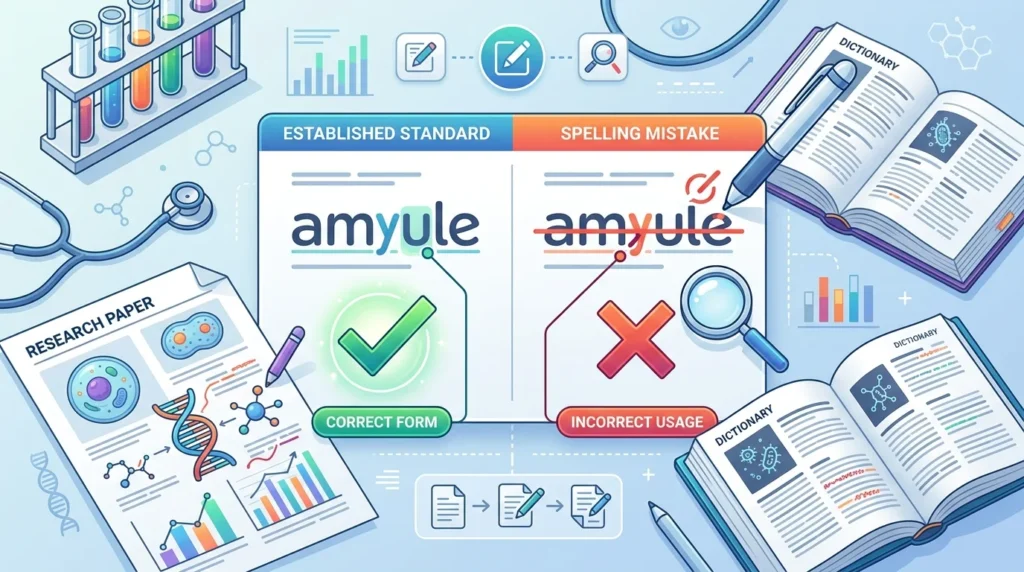
Dysregulated vs Disregulated: Incorrect vs Correct
| Incorrect or Nonstandard | Correct | Why |
|---|---|---|
| The patient became disregulated. | The patient became dysregulated. | Dysregulated is the established term for impaired regulation in this context. |
| She experienced emotional disregulation. | She experienced emotional dysregulation. | The established noun is dysregulation. |
| The study examined disregulated behavior. | The study examined dysregulated behavior. | Dysregulated behavior is the established psychological expression. |
| The researchers observed disregulated immune activity. | The researchers observed dysregulated immune activity. | The term refers to impaired or abnormal regulation. |
| The cells showed disregulated signaling. | The cells showed dysregulated signaling. | Dysregulated is the standard technical adjective. |
| The child displayed disregulated emotions. | The child displayed dysregulated emotions. | The psychological use is conventionally spelled dysregulated. |
| The researchers found disregulated glucose metabolism. | The researchers found dysregulated glucose metabolism. | Cambridge specifically uses dysregulated glucose metabolism. |
| The report discusses emotional disregulation. | The report discusses emotional dysregulation. | Dysregulation is the established noun form. |
| The nervous system was described as disregulated. | The nervous system was described as dysregulated. | The intended meaning is abnormal or impaired regulation. |
| The experiment produced disregulated responses. | The experiment produced dysregulated responses. | Dysregulated is the standard adjective in this technical context. |
| The article refers to disregulation of emotions. | The article refers to dysregulation of emotions. | The standard terminology uses dysregulation. |
| The process became disregulated after the treatment. | The process became dysregulated after the treatment. | The established term describes a regulatory process that is not functioning normally. |
Why Do People Make This Mistake?
The Prefix “Dis-” Is More Familiar
One major reason for the confusion is that dis- appears in many familiar English words, including disconnect, disagree, disapprove, and disorganized.
Because dis- is so familiar, writers may naturally assume that “not regulated” should become disregulated. But established vocabulary does not always follow a pattern that feels logical to a modern speaker.
Dys- Has a More Specialized Use
The prefix dys- is less common in everyday English but appears frequently in medical and scientific vocabulary. It can indicate something abnormal, impaired, difficult, or faulty.
Examples include:
- dysfunction
- dyslexia
- dysphagia
- dysplasia
- dysregulation
That makes dysregulated a natural fit for a technical term describing impaired regulation.
The Words Sound Similar
Dysregulated and disregulated are very close in pronunciation. Cambridge gives the pronunciation of dysregulated as /dɪsˈreɡ.jə.leɪ.tɪd/ in British English and /dɪsˈreɡ.jəleɪ.t̬ɪd/ in American English.
Because the first syllable is easy to hear as “dis,” a listener who has never seen the word written may reasonably spell it with dis-.
English Prefixes Are Not Always Predictable
English contains many words whose spelling cannot be predicted simply by attaching a familiar prefix to a base word. Historical origins, borrowing, and established usage all influence modern vocabulary.
Therefore, “dis + regulated” may look reasonable, but appearance alone does not establish it as the standard spelling.
Spellcheck Does Not Explain Every Word Choice
Digital spellcheckers are useful, but they are not a substitute for understanding terminology. A word can appear in online text without being the standard form, and unusual terms may not always be flagged consistently.
For specialized vocabulary, dictionary and field-specific usage are more reliable guides than simply copying a form that appears online.
Common Mistakes Checklist
- Writing disregulated instead of dysregulated: Use dysregulated for the established meaning of impaired regulation.
- Writing disregulation instead of dysregulation: The standard noun is dysregulation.
- Assuming dis- and dys- mean the same thing: They have different historical and semantic roles.
- Using pronunciation to decide spelling: The initial sound can make dys- sound like “dis,” so check the written form.
- Assuming every online occurrence is standard: Search results can contain informal writing, mistakes, and rare usages.
- Using the term without considering the audience: In general writing, a simpler phrase such as “not properly regulated” may sometimes be clearer.
Dysregulated in Real English
Grammatically Correct and Natural
Dysregulated is natural in specialized contexts involving biology, medicine, psychology, and scientific research. Expressions such as dysregulated glucose metabolism, dysregulated signaling, and dysregulated behavior fit established professional usage. Cambridge explicitly categorizes the word as specialized and provides both medical and psychological examples.
Correct but Technical
A sentence such as “The researchers observed dysregulated cellular signaling” is grammatically correct, but it is technical. A general reader may understand “the cells were not regulating their signals normally” more easily. The choice depends on the audience. In scientific or academic writing, the specialized term can be useful because it communicates a specific concept efficiently.
Natural in Everyday Conversation, but More Specialized
Dysregulated can appear in everyday conversations, especially when people discuss emotions or behavior. However, it remains more specialized than simple expressions such as “overwhelmed,” “having trouble calming down,” or “not responding normally.” The specialized term is appropriate when precision matters, but a plain-English alternative may be better for readers unfamiliar with the terminology.
Disregulated as a General Replacement
Using disregulated as an interchangeable replacement for dysregulated is not recommended in standard contemporary writing. Although the form can occasionally be found in published or specialized material, that does not make it the standard general-purpose spelling. For ordinary professional, academic, and educational writing, dysregulated is the safer established choice.
American vs. British English
There is no meaningful American-versus-British spelling difference between dysregulated and disregulated. Both British and American English use dysregulated as the established form.
The pronunciation varies slightly between the two varieties, but the spelling remains the same. Cambridge provides both UK and US pronunciations for dysregulated.
| English Variety | Standard Spelling |
|---|---|
| American English | dysregulated |
| British English | dysregulated |
| International professional English | dysregulated |
Formal vs. Informal Usage
Formal and Professional
Dysregulated is particularly useful in academic, scientific, medical, psychological, and professional writing when the concept of impaired regulation is important.
Example:
“The study investigated dysregulated inflammatory responses.”
See Also: NWS Meaning in Text: What It Means & How to Use It
Informal
The word can also be used informally, especially in conversations about emotional reactions. However, technical vocabulary may not always be the clearest option for a general audience.
For example:
Technical: “I felt emotionally dysregulated after the stressful experience.”
Plain English: “I had trouble managing my emotions after the stressful experience.”
Neither style is automatically better. The best choice depends on who is reading or listening.
Dysregulated vs. Unregulated vs. Deregulated
These terms can be confused because they all relate to regulation, but they should not be treated as interchangeable.
| Term | General Meaning | Typical Use |
|---|---|---|
| Dysregulated | Regulated abnormally or improperly | Medicine, psychology, biology, science |
| Unregulated | Not controlled or governed by regulation | General and professional contexts |
| Deregulated | Regulation has been reduced or removed | Government, economics, business, policy |
| Disregulated | Not the standard general form for the intended meaning | Occasional nonstandard or specialized occurrences |
This distinction is especially useful because deregulated is a real and established word. For example, an industry can be deregulated when government controls or restrictions are reduced. That is different from saying that a biological or emotional process is dysregulated.
Dysregulated vs. Deregulated
Dysregulated
Use dysregulated when the regulation of a process is impaired or not functioning normally.
Example: “The researchers observed dysregulated immune activity.”
Deregulated
Use deregulated when an established system of regulation has been reduced, removed, or changed, particularly in economic or policy contexts.
Example: “The government deregulated the industry.”
These words may sound related, but they describe different concepts.
Real-Life Situations
Interview
If you are discussing research or psychology in an interview, you might say:
“The study focused on dysregulated emotional responses.”
The term is suitable when the subject is specialized.
Meeting
During a scientific or technical meeting:
“The team found evidence of dysregulated signaling in the samples.”
Here, the specialized word provides a concise description.
In a professional email:
“The report includes a section on dysregulated immune responses.”
The spelling should remain dysregulated.
Text Message
In a casual message, you might write:
“I felt really overwhelmed after everything happened.”
You could also use dysregulated if that is the terminology you normally use, but a simpler phrase may be clearer to a general audience.
Exam
In an academic exam:
“Dysregulated metabolic processes can interfere with normal physiological function.”
The established technical spelling is appropriate.
Research Paper
In scientific writing:
“The findings indicate that dysregulated cellular signaling may be associated with the observed response.”
The word is suitable because the paper is discussing a regulatory mechanism in a technical context.
How to Remember Dysregulated
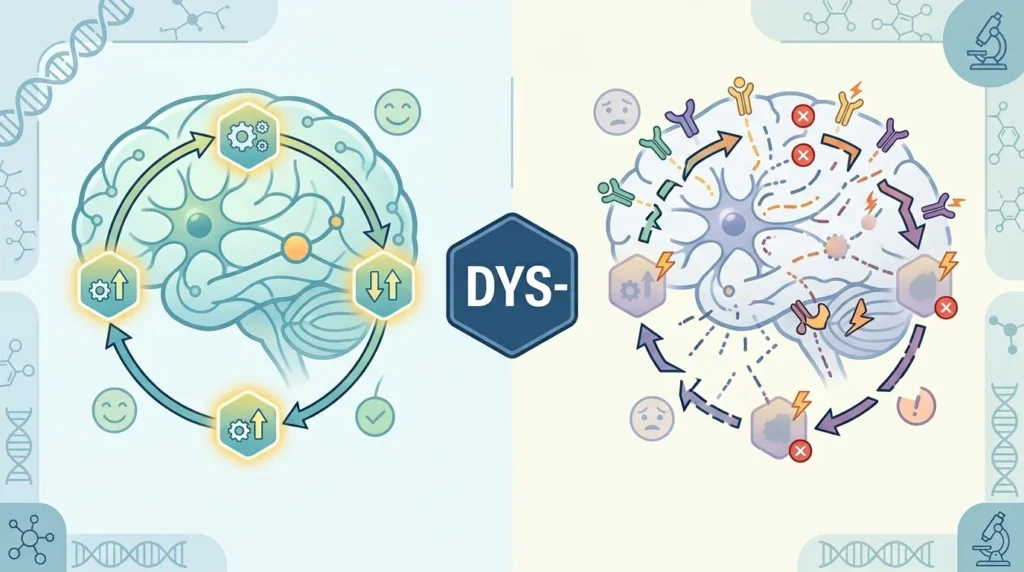
The easiest memory trick is to connect dys- with dysfunction.
Dysfunction = function that is not working properly.
Dysregulation = regulation that is not working properly.
Dysregulated = being regulated improperly or abnormally.
So remember:
DYS = something is going wrong with normal function.
This helps separate dysregulated from the tempting but nonstandard disregulated.
A Simple Sentence Test
When you are unsure which spelling to use, ask yourself:
“Am I describing something that is being regulated poorly or abnormally?”
If the answer is yes, dysregulated is the established choice.
- Identify the process being discussed.
- Ask whether its regulation is impaired or abnormal.
- If yes, use dysregulated.
- If you mean that regulation has been removed, consider whether deregulated or unregulated is the better word.
- Avoid using disregulated as a casual substitute for dysregulated.
Quick Comparison Table
| Feature | Dysregulated | Disregulated |
|---|---|---|
| Standard established form? | Yes | Not the standard form for this meaning |
| Basic idea | Impaired or abnormal regulation | Usually intended as a variant of dysregulated |
| Medical use | Established | Not the standard choice |
| Psychological use | Established | Not the standard choice |
| Scientific use | Established | Not the standard general form |
| Correct noun | dysregulation | Usually replace with dysregulation |
| Easy memory cue | dys = impaired/abnormal | Do not use as the default form |
Mini Quiz: Dysregulated or Disregulated?
Question 1
Which spelling is standard?
A) Dysregulated
B) Disregulated
Answer: A) Dysregulated.
Question 2
Complete the sentence: “The researchers observed ___ immune activity.”
Answer: dysregulated.
Question 3
Which noun is standard?
A) Disregulation
B) Dysregulation
Answer: B) Dysregulation.
Question 4
What does dysregulated generally describe?
Answer: A process, system, emotion, or behavior whose regulation is impaired, abnormal, or not functioning as it normally should.
Question 5
Which sentence is correct?
A) The study examined disregulated behavior.
B) The study examined dysregulated behavior.
Answer: B.
Question 6
Is dysregulated used only for emotions?
Answer: No. It is also used for biological, medical, cellular, metabolic, and other regulatory processes.
Question 7
Which word describes reduced or removed regulation in contexts such as industry or government?
Answer: Deregulated.
Question 8
What is the easiest spelling memory trick?
Answer: Connect dysregulated with dysfunction: both use dys- to signal an abnormal or impaired function.
Frequently Asked Questions
Is dysregulated or disregulated correct?
Dysregulated is the established standard form for describing impaired or abnormal regulation. Disregulated is sometimes encountered, but it should not normally be used as an interchangeable spelling in standard professional or academic writing.
What does dysregulated mean?
Dysregulated describes something that is not being controlled or regulated in the way it normally should be. It is used in medical and psychological contexts and also appears in scientific discussions of biological processes.
Is disregulated a real word?
Disregulated does appear occasionally in published and online material, so it would be too broad to claim that the letter sequence never occurs in English. However, it is not the standard general form people should choose when they mean the established medical, psychological, or scientific term dysregulated.
Is emotional dysregulated correct?
The more usual grammatical expression is emotionally dysregulated when describing a person or their state, or emotional dysregulation when naming the concept. For example: “She felt emotionally dysregulated” and “The study examined emotional dysregulation.”
What is emotional dysregulation?
Emotional dysregulation refers broadly to difficulty regulating emotional responses. The term is used in psychological research and clinical contexts. The exact meaning can depend on the framework or study in which it appears.
Is dysregulated a medical word?
Yes. Cambridge classifies dysregulated as a specialized adjective and gives medical examples involving glucose metabolism and cell signaling. It is also used in psychology to describe emotional or behavioral regulation.
Is dysregulated only used for mental health?
No. Although emotional dysregulation is a familiar use, the word is much broader. It can describe biological, metabolic, immune, cellular, neurological, and other regulatory processes. Cambridge gives both medical and psychological uses.
Is dysregulated the same as unregulated?
Not necessarily. Dysregulated generally points to regulation that is impaired or abnormal. Unregulated more directly means that something is not regulated or controlled. The appropriate word depends on the exact meaning of the sentence.
Is dysregulated the same as deregulated?
No. Deregulated commonly describes the reduction or removal of regulation, especially in government, economics, or industry. Dysregulated describes regulation that is functioning abnormally or improperly.
Why do people spell dysregulated as disregulated?
The mistake is understandable because dis- is a very common English prefix, while dys- is more specialized. The two forms also sound similar. Writers may therefore choose the familiar dis- spelling even though dysregulated is the established term.
Is dysregulated the same spelling in American and British English?
Yes. Both American and British English use dysregulated. The pronunciation can vary slightly, but there is no American-versus-British spelling difference for this word.
What is the easiest way to remember dysregulated?
Connect it with dysfunction. If dysfunction means impaired or abnormal function, then dysregulated can be remembered as impaired or abnormal regulation. This makes dys- the useful spelling cue.
Quick Summary
Dysregulated is the established spelling for something whose regulation is impaired, abnormal, or not functioning as it normally should. It is widely used in medical, psychological, biological, and scientific contexts. Disregulated is sometimes found in published or informal writing, but it is not the standard general-purpose replacement for dysregulated. The easiest way to remember the correct spelling is to connect dysregulated with dysfunction: both use dys- to describe abnormal or impaired functioning. Also remember that dysregulated, unregulated, and deregulated are not interchangeable. Choose the word according to whether regulation is impaired, absent, or deliberately reduced.
See Also: NTH Meaning in Text: What It Means & How to Use It