
Preserves and presents are both correct English words, but they have different meanings. Preserves is usually the third-person singular form of preserve, meaning “keeps,” “protects,” or “maintains.” Presents is usually the third-person singular form of present, meaning “shows,” “introduces,” “offers,” or “gives.” Present can also be a noun meaning gifts, but preserves does not have that meaning.
What Is the Difference Between Preserves and Presents?
The main difference is their meaning and the action they describe.
- Preserves means keeps something safe, unchanged, protected, or in good condition.
- Presents means shows, introduces, offers, gives, or formally communicates something.
Both words can be verbs, and both normally end in -s when used with a singular third-person subject in the simple present tense.
For example:
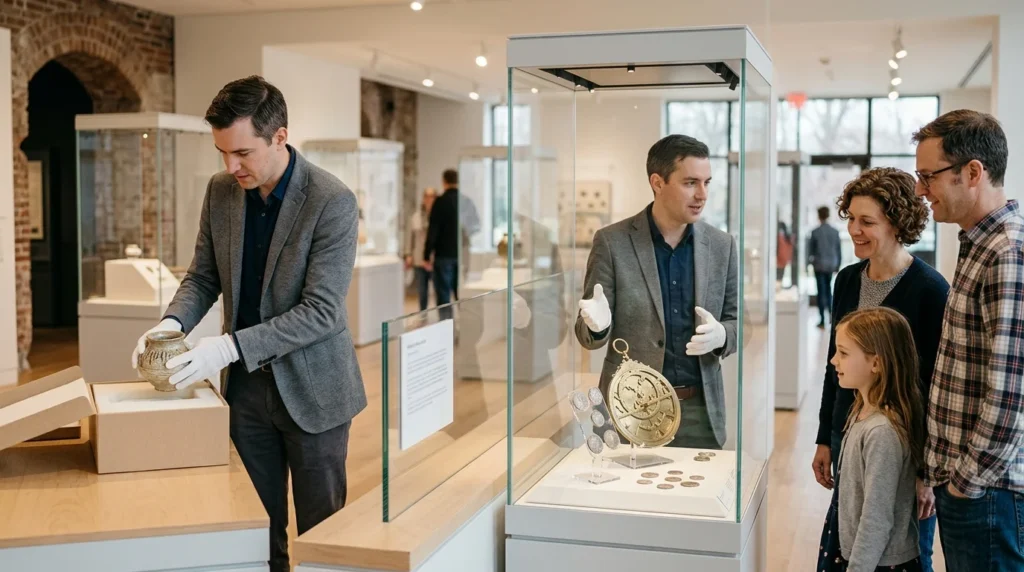
The museum preserves ancient artifacts.
Here, preserves means “protects and keeps in good condition.”
The museum presents a new exhibition.
Here, presents means “shows or introduces.”
Why It Matters
Confusing preserves with presents can change the meaning of a sentence completely. This matters in academic writing, reports, business communication, descriptions, presentations, and everyday English.
Compare these sentences:
The archive preserves historical records.
The archive protects and keeps the records.
The archive presents historical records.
The archive displays, introduces, or makes the records available to an audience.
The words are close in spelling, but they describe different actions. Choosing the correct one makes the sentence precise.
The Core Rule
Preserves = keeps, protects, or maintains.
Presents = shows, introduces, offers, or gives.
A simple way to remember the difference is:
If something is being kept safe or maintained, use “preserves.” If something is being shown, introduced, or given, use “presents.”
How to Use Preserves
Preserves is the third-person singular present-tense form of the verb preserve.
The verb preserve means to protect something from damage, loss, destruction, decay, or unwanted change. It can also mean maintaining a quality, condition, tradition, relationship, or characteristic.
Preserves Meaning “Keeps Safe”
The museum preserves ancient paintings.
Here, the museum protects the paintings so they remain in good condition.
Preserves Meaning “Maintains”
The agreement preserves the rights of both parties.
In this sentence, preserves means maintains or protects those rights.
Preserves Meaning “Protects from Change or Loss”
The organization preserves local traditions.
This means the organization helps keep those traditions alive.
Preserves as a Food-Related Verb
Preserve can also refer to treating food so that it lasts longer. For example:
The company preserves fruit using traditional methods.
Here, preserves means processes or stores the fruit in a way that helps prevent spoilage.
How to Use Presents
Presents is the third-person singular present-tense form of the verb present.
As a verb, present can mean to show something, introduce something, formally give something, or communicate information to an audience.
Presents Meaning “Shows”
The report presents several possible solutions.
Here, presents means shows or describes the solutions.
See Also: Kinesthesiology vs Kinesiology: Differences and Correct Usage
Presents Meaning “Introduces”
The host presents the guest to the audience.
Here, presents means formally introduces the guest.
Presents Meaning “Gives”
The organization presents an award to the winner.
Here, presents means formally gives the award.
Presents Meaning “Delivers Information”
The researcher presents the findings at the conference.
Here, presents means communicates or explains the findings to an audience.
Correct Examples
- The library preserves thousands of historical documents.
- The teacher presents the lesson in a clear way.
- The organization preserves local cultural traditions.
- The report presents the results of the study.
- This treatment preserves the quality of the food.
- The museum presents a new collection this month.
- The law preserves the rights of citizens.
- The speaker presents the proposal to the committee.
- The archive preserves letters from the nineteenth century.
- The website presents information in an easy-to-read format.
- The community project preserves an important local tradition.
- The company presents its annual report to investors.
Incorrect vs. Correct
| Incorrect | Correct | Why |
|---|---|---|
| The museum presents ancient paintings from damage. | The museum preserves ancient paintings from damage. | The meaning is to protect the paintings, so preserves is needed. |
| The researcher preserves her findings at the conference. | The researcher presents her findings at the conference. | The researcher is showing or explaining the findings. |
| The law presents traditional customs. | The law preserves traditional customs. | The intended meaning is to protect or maintain the customs. |
| The speaker preserves the new proposal to the board. | The speaker presents the new proposal to the board. | A proposal is being formally shown or explained. |
| The archive presents old documents for future generations. | The archive preserves old documents for future generations. | The archive keeps the documents safe. |
| The report preserves the results of the experiment. | The report presents the results of the experiment. | A report communicates or shows results, so presents fits. |
| The museum preserves a new exhibition this weekend. | The museum presents a new exhibition this weekend. | The museum is showing or introducing the exhibition. |
| The process presents the food for longer storage. | The process preserves the food for longer storage. | The meaning is to protect the food from spoilage. |
| The teacher preserves the topic to the class. | The teacher presents the topic to the class. | The teacher is introducing or explaining the topic. |
| The organization presents the historic building from deterioration. | The organization preserves the historic building from deterioration. | The organization protects the building from damage. |
Why People Make This Mistake
Similar Spelling
The words preserves and presents begin with pres- and have a similar overall shape. When people write quickly, this visual similarity can cause one word to be substituted for the other.
Similar Sound Patterns
The words are also relatively close in pronunciation, especially when spoken quickly. However, their meanings are different, so listening alone is not always enough to select the correct spelling.
Focusing on Spelling Instead of Meaning
A common mistake is choosing the word that looks familiar without first asking what action the sentence describes.
Ask yourself:
- Is something being protected or maintained? Use preserves.
- Is something being shown, introduced, or given? Use presents.
Autocorrect Does Not Always Solve the Problem
Spellcheck tools can identify many misspellings, but preserves and presents are both correctly spelled words. If you use the wrong one in a sentence, ordinary spellcheck may not flag it because the spelling itself is valid.
Translation Interference
Learners whose first language uses one broad verb for several related actions may find this distinction difficult. English separates ideas such as protecting something and presenting something with different verbs.
Common Mistakes Checklist
- Using presents when you mean protects: Check whether something is being kept safe or maintained.
- Using preserves when you mean shows: If information is being communicated to an audience, use presents.
- Confusing present with preserve: Remember that adding -erve changes the verb completely.
- Choosing by spelling alone: Decide what the sentence means before selecting the word.
- Trusting spellcheck completely: Both forms are correctly spelled, so context matters.
Preserves vs. Presents in Real English
Preserves in Natural English
Preserves is natural when the subject actively keeps something safe, maintains it, or prevents it from being lost or damaged. Common combinations include “preserves history,” “preserves culture,” “preserves evidence,” “preserves tradition,” and “preserves quality.” It is especially natural when something valuable is being protected for continued use or future generations.
Presents in Natural English
Presents is natural when a person, organization, report, website, or other subject shows or communicates information. Common combinations include “presents the results,” “presents a proposal,” “presents evidence,” and “presents an opportunity.” It is also natural for formal giving or introducing, such as presenting an award or presenting a speaker.
When the Two Can Appear in the Same Sentence
Both words can naturally occur together when a sentence describes two different actions. For example: “The museum preserves historic objects and presents them to the public.” The museum protects the objects while also displaying or explaining them. The words are not interchangeable; they describe separate actions in the same sentence.
American vs. British English
There is no meaningful American-versus-British spelling difference between preserves and presents. Both forms are used in standard American and British English with the same basic meanings.
| English Variety | Preserves | Presents |
|---|---|---|
| American English | Correct | Correct |
| British English | Correct | Correct |
Formal vs. Informal Usage
Both preserves and presents are neutral English verbs. They are suitable for everyday conversation as well as formal writing.
Preserves commonly appears in academic, historical, scientific, environmental, legal, and cultural contexts.
Presents commonly appears in academic, business, professional, media, educational, and presentation contexts.
Neither word is inherently informal or formal. The surrounding sentence determines the register.
Comparison Table

| Feature | Preserves | Presents |
|---|---|---|
| Base verb | Preserve | Present |
| Part of speech | Verb | Verb |
| Basic meaning | Keeps, protects, maintains | Shows, introduces, offers, gives |
| Typical object | History, culture, food, records, quality | Information, results, proposals, awards, ideas |
| Example | The archive preserves old records. | The report presents new findings. |
| Can they be substituted? | No | No |
Preserves vs. Presents: Word Forms
| Verb | Base Form | Third-Person Singular | -ing Form | Past Form |
|---|---|---|---|---|
| Preserve | preserve | preserves | preserving | preserved |
| Present | present | presents | presenting | presented |
Real-Life Situations
In an Interview
Natural: “Our company preserves customer records securely.”
The verb describes keeping records safe.
In a Meeting
Natural: “Sarah presents the quarterly results to the team.”
The verb describes explaining or showing information.
See Also: SMFH Meaning in Text: What It Means & How to Use It
In an Email
Natural: “The new system preserves the original formatting of the documents.”
The system keeps the formatting unchanged.
In a Text Message
Natural: “This container preserves the food for several days.”
The container helps keep the food in usable condition.
In an Exam
Natural: “The national archive preserves important historical records.”
The meaning is protection and maintenance, so preserves is correct.
In Academic Writing
Natural: “The study presents evidence supporting the proposed explanation.”
The study communicates or shows evidence, so presents is appropriate.
How to Remember the Difference
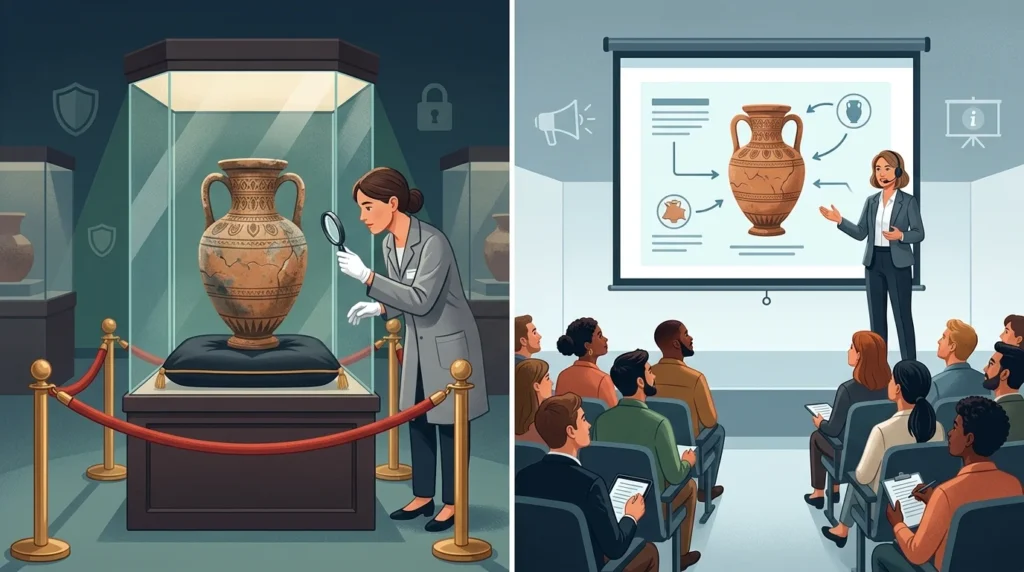
- Think preserve = protect.
- Think present = show.
- If something stays safe, use preserves.
- If something is shown to an audience, use presents.
A useful memory sentence is:
“A museum preserves history and presents it to visitors.”
In that sentence, preserves means protects and maintains history, while presents means shows it to visitors.
Quick Practice Quiz
Choose preserves or presents in each sentence.
- The museum ______ rare historical documents.
- The scientist ______ her findings at the conference.
- The special packaging ______ the food’s freshness.
- The report ______ several possible solutions.
- The organization ______ traditional crafts.
- The speaker ______ the award to the winner.
- The archive ______ valuable photographs.
- The website ______ information about the new service.
Answers
- preserves
- presents
- preserves
- presents
- preserves
- presents
- preserves
- presents
Frequently Asked Questions
What is the difference between preserves and presents?
Preserves means keeps, protects, or maintains something. Presents means shows, introduces, offers, or formally gives something.
Is preserves a correct English word?
Yes. Preserves is the third-person singular present form of preserve. For example, “The museum preserves ancient artifacts.”
Is presents a correct English word?
Yes. Presents is the third-person singular present form of present. For example, “The researcher presents the results.”
Does preserves mean protects?
Yes. In many contexts, preserves means protects something from damage, destruction, loss, decay, or unwanted change.
Does presents mean shows?
Yes. One common meaning of presents is “shows” or “communicates.” For example, “The report presents the results of the study.”
Can preserves and presents be used interchangeably?
No. Although they look and sound somewhat similar, they describe different actions. Preserves focuses on keeping or protecting, while presents focuses on showing, introducing, or giving.
What is the past tense of preserves?
The past tense of preserve is preserved. For example: “The museum preserved the documents carefully.”
What is the past tense of presents?
The past tense of present is presented. For example: “The researcher presented the findings yesterday.”
Can presents mean gifts?
Yes, but there is an important grammatical distinction. Presents can be the plural noun meaning gifts, as in “She opened her presents.” It can also be the third-person singular verb form of present, as in “She presents the results.” Context tells you which meaning applies.
What is an easy way to remember preserves vs presents?
Remember preserves = protects and presents = shows. If something is being kept safe or maintained, choose preserves. If something is being shown, introduced, or given, choose presents.
Quick Summary
Preserves and presents are both correct English words, but they have different meanings. Preserves is the third-person singular form of preserve and means keeps, protects, maintains, or prevents something from being lost or damaged. Presents is the third-person singular form of present and means shows, introduces, offers, gives, or communicates something. For example, a museum preserves historical objects but presents them to visitors. The easiest memory rule is simple: preserves = protects; presents = shows. Although the words look similar, they cannot normally replace each other. Always choose based on the action you want the sentence to describe.